Telluria
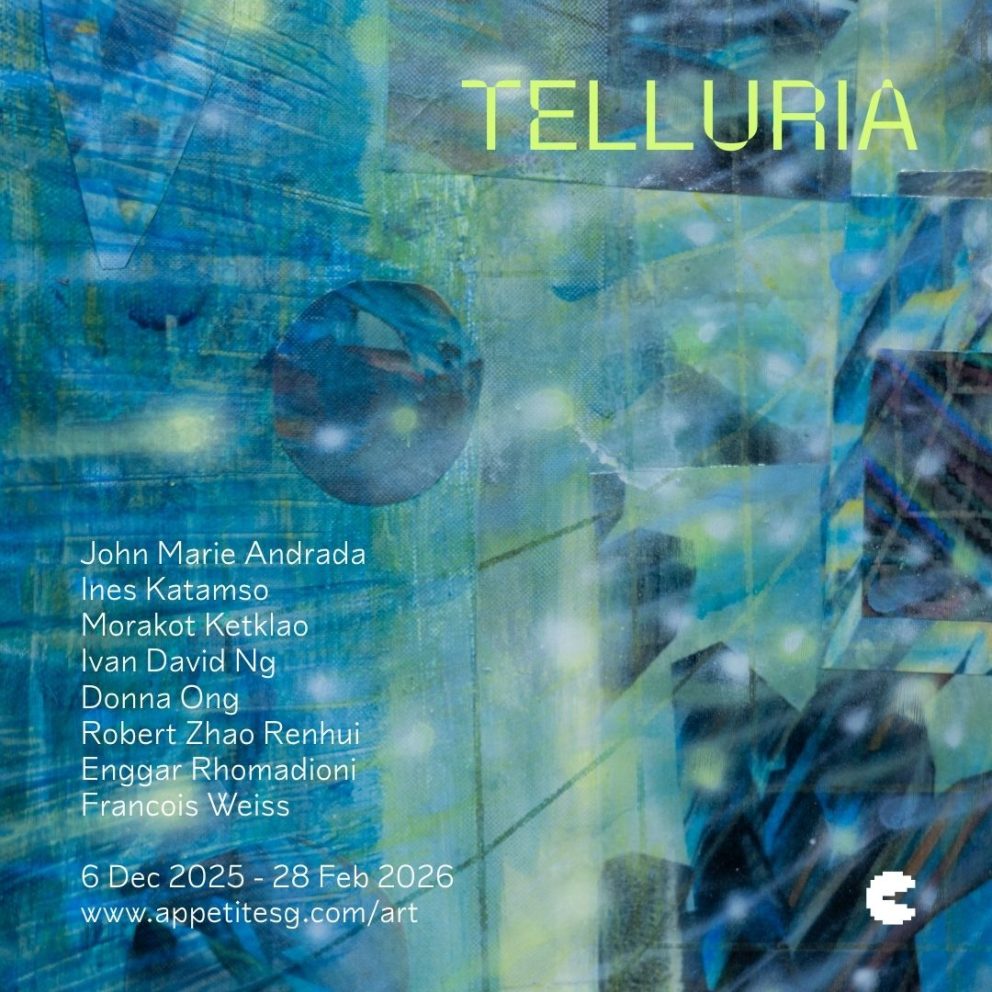
“…from this begins the new myth of our time…”
Towards the end of his life, renowned mythologist Joseph Campbell opined that the “future myth” — in fact, “the only myth that is going to be worth thinking about in the immediate future” — would be one that addresses the planet, or “how to relate this society to the world of nature and the cosmos.”
The exhibition title Telluria is derived from the Latinate root tellur (meaning “of or relating to the earth”) coupled with a lyrical and mythic suffix (-uria). The name recalls that of the “lost continent” of Lemuria, a land-shelf theorized to have once connected Madagascar and India, which later took on a mythology of its own as the birthplace of humanity and the cradle of a spiritual civilization. As such, Telluria speaks of — and to — primal origins and a mythic essence connected to the Earth: an enduring fascination with how the land and its unique features have shaped species and stories, and how the history of civilization is inextricably bound up with ecology and myth-making.
Now, more than ever, we need new myths to re-imagine our relationship with the sentient Earth and our place within the cosmos. The Gaia hypothesis of the late 20th century shaped an understanding of the Earth as a giant, self-regulating organism, where biology and the physical environment evolve alongside each other. Today, in a time of ecological peril, mythological thinking opens up space for imagining alternatives, enfolding the human with the more-than-human. In stories woven from earth, dream, and urgency, Telluria envisions an intertwining of the ancient and the future, the material and the mythic.
“That’s where truth lies, in our myths and in our songs.
That’s where the seeds are.”
~ Toni Morrison
Open to public
6 December 2025 – 28 February 2026.

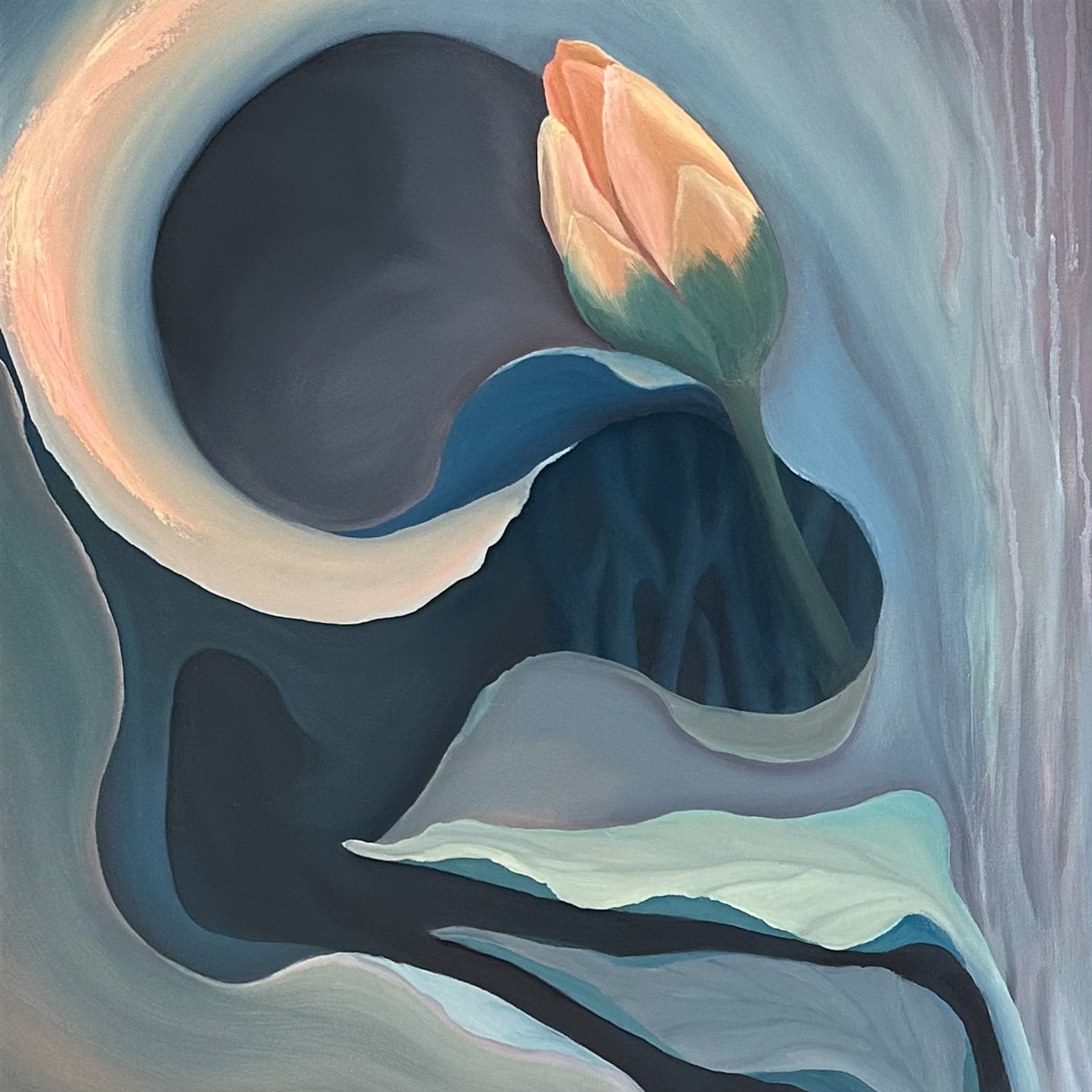
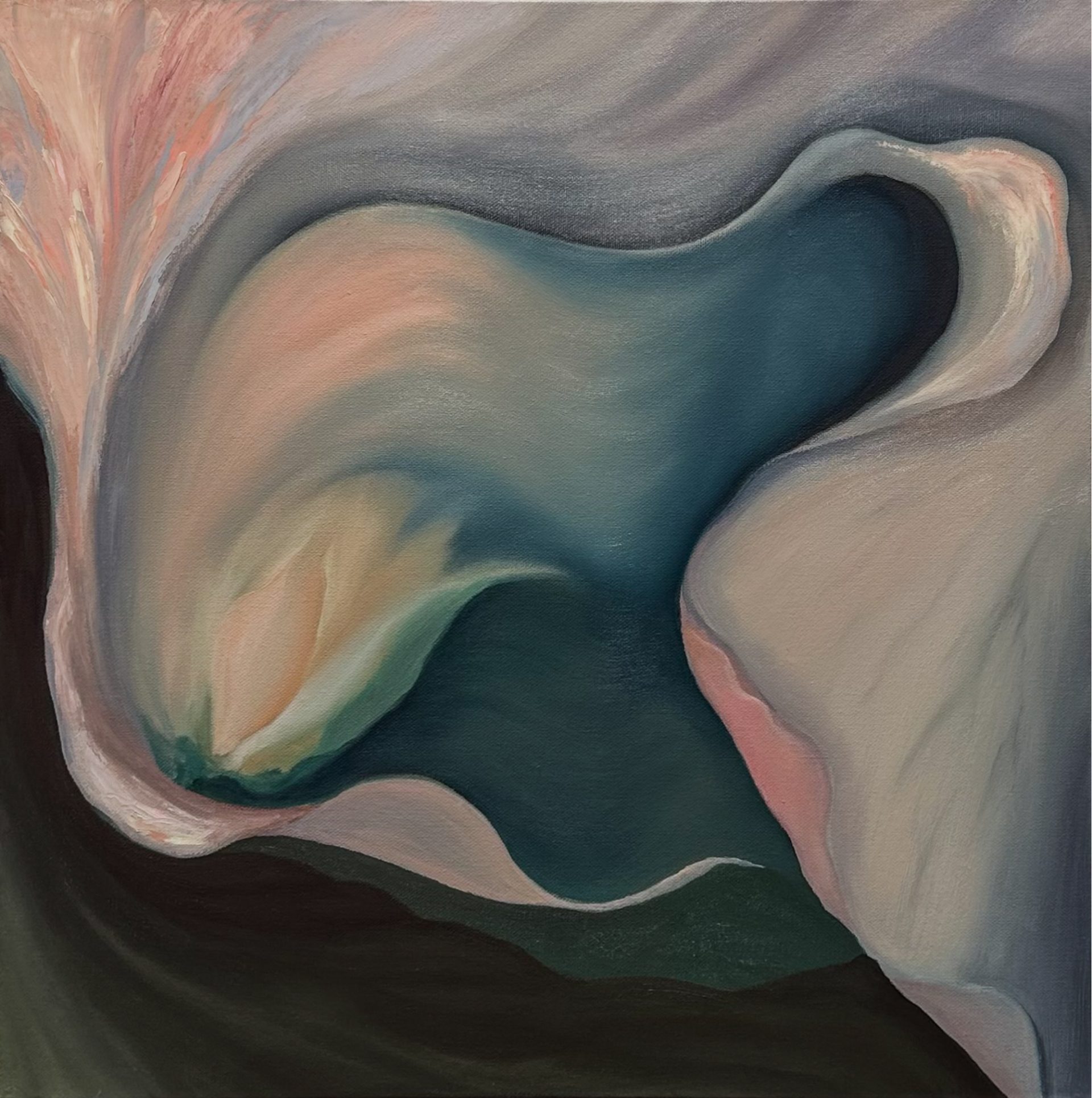
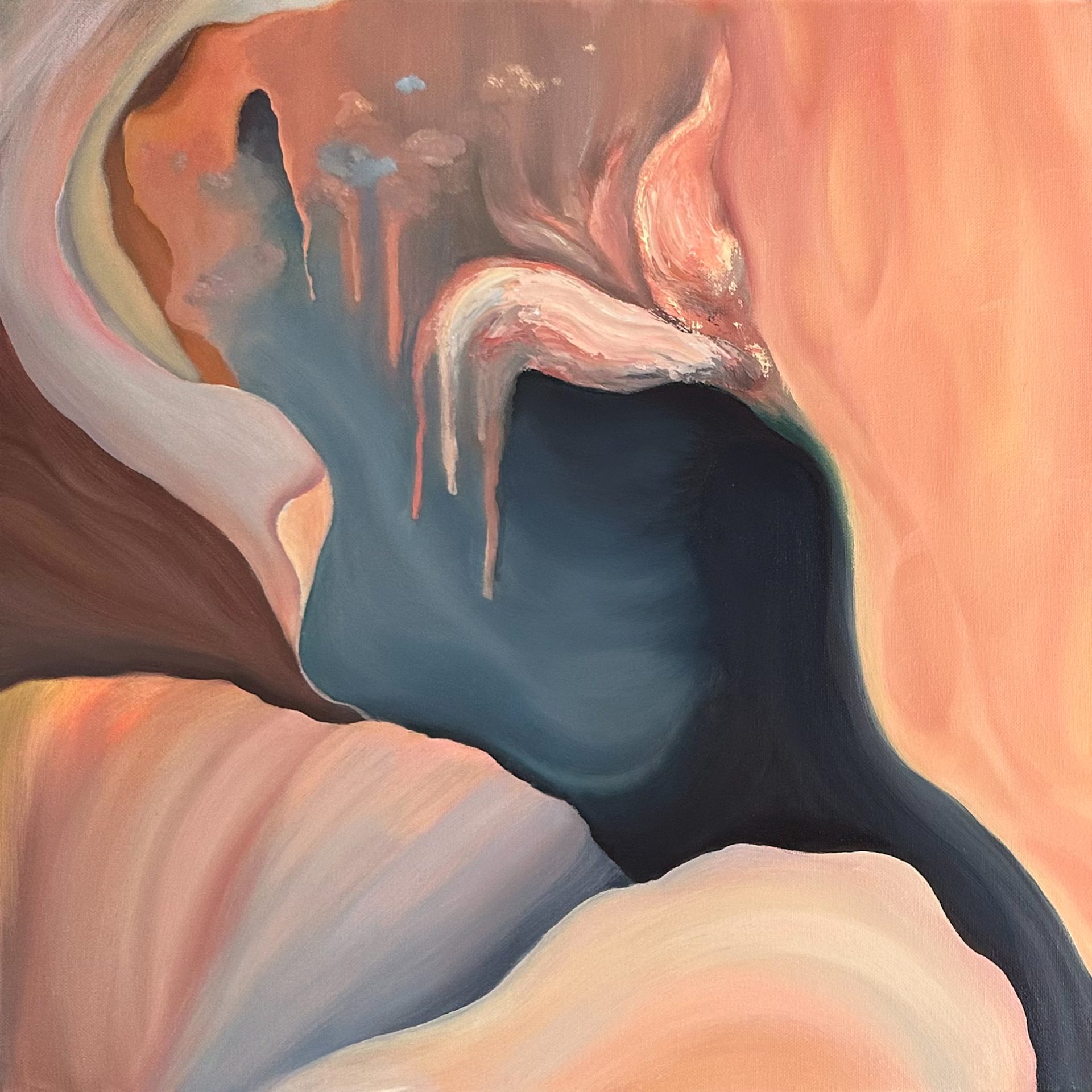
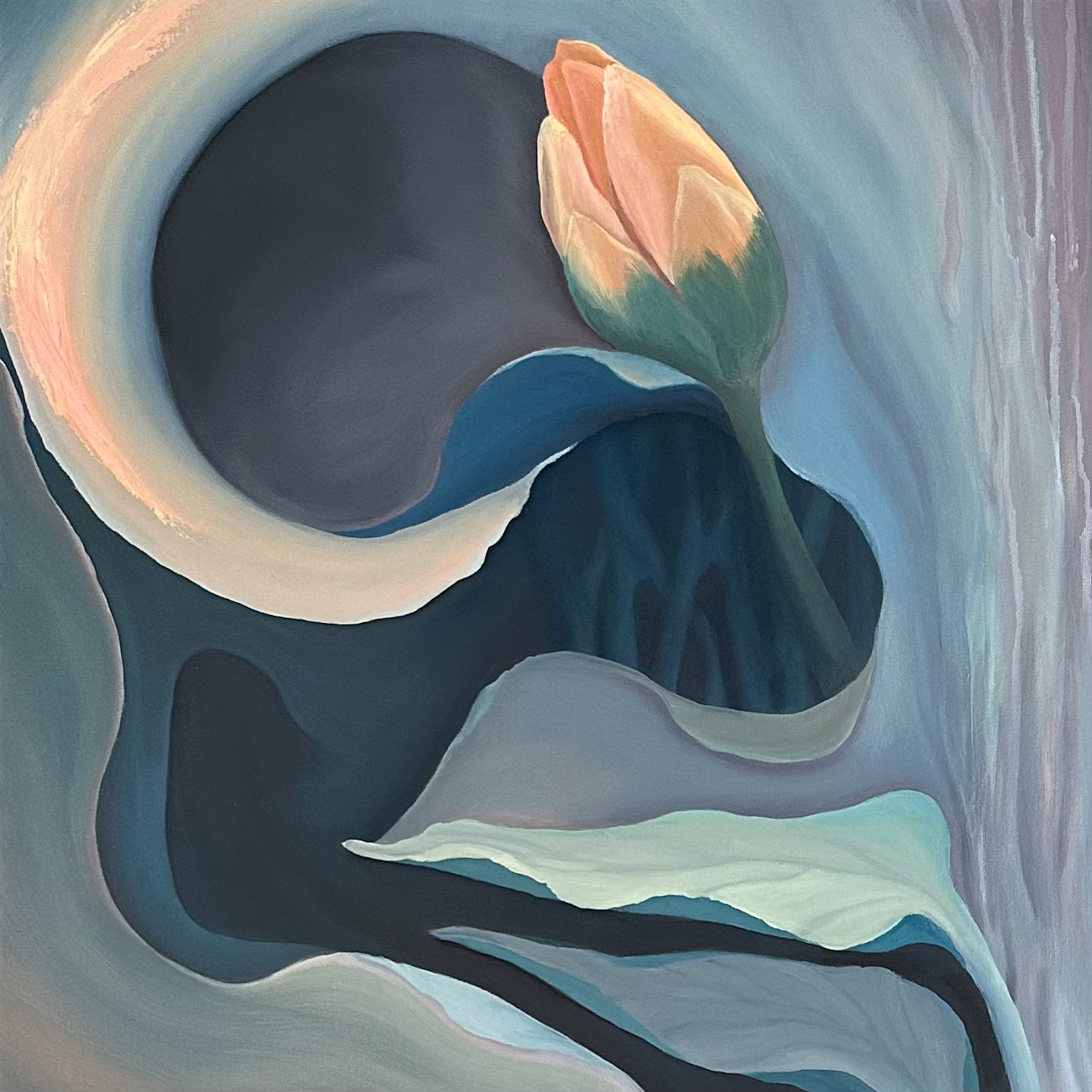
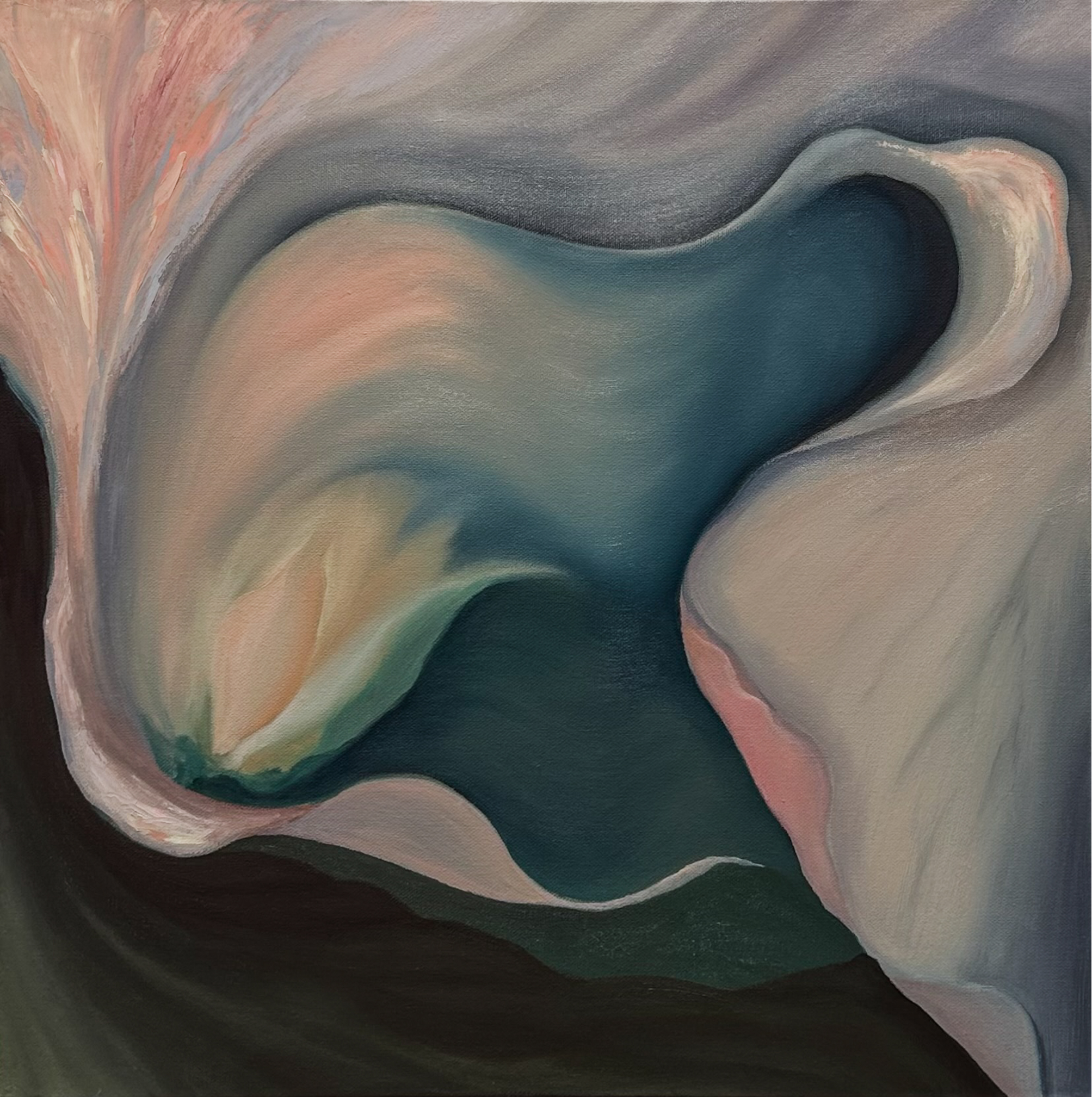
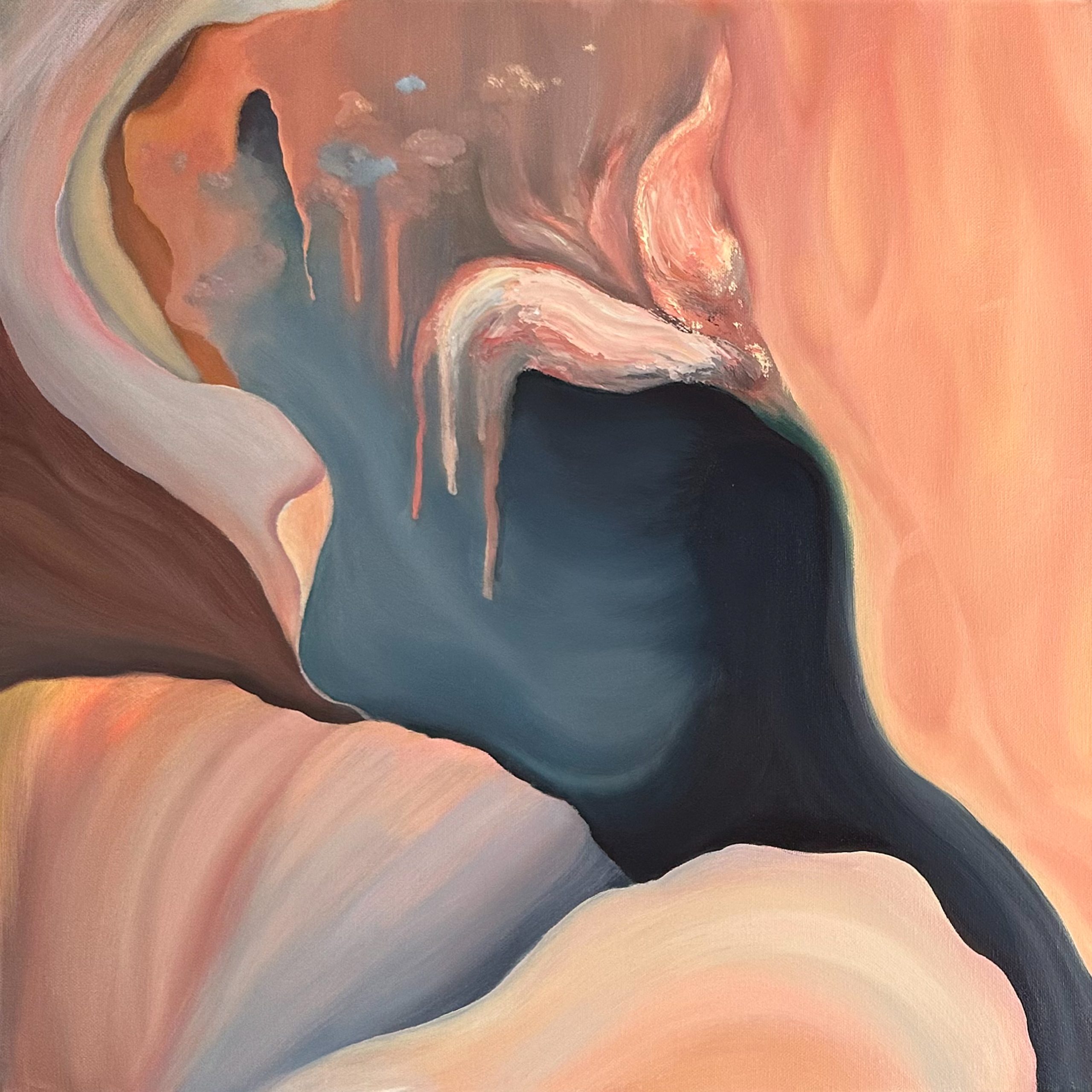
John Marie Andrada’s works are rooted in observations of visual similarities between the natural world and the human body. In her dreamlike paintings, cavities and contours shapeshift into caves and undulating forms, mirroring the mutability of the body, psyche and the earth. In this series, the artist intuits internal landscapes that continually and organically evolve, and unfold.
John Marie Andrada (b. 2001) is a Filipino artist based in Singapore. Experimenting with various mediums including drawing, painting, video and installation, she explores notions of identity, memory, and time. In 2024 she debuted her first solo exhibition with Haridas Contemporary, Singapore. She was also the recipient of the Winston Oh Travelogue Award (2023), and one of the selected graduates for Undescribed #9 (2023) at DECK, Singapore. Her works have been featured in exhibitions in Türkiye (2021) and China (2021), and received the Special Choice Award for the 41st Daegu International Grand Exhibition, Korea (2022).
The works of Ines Katamso intersect ecology, culture and myth.
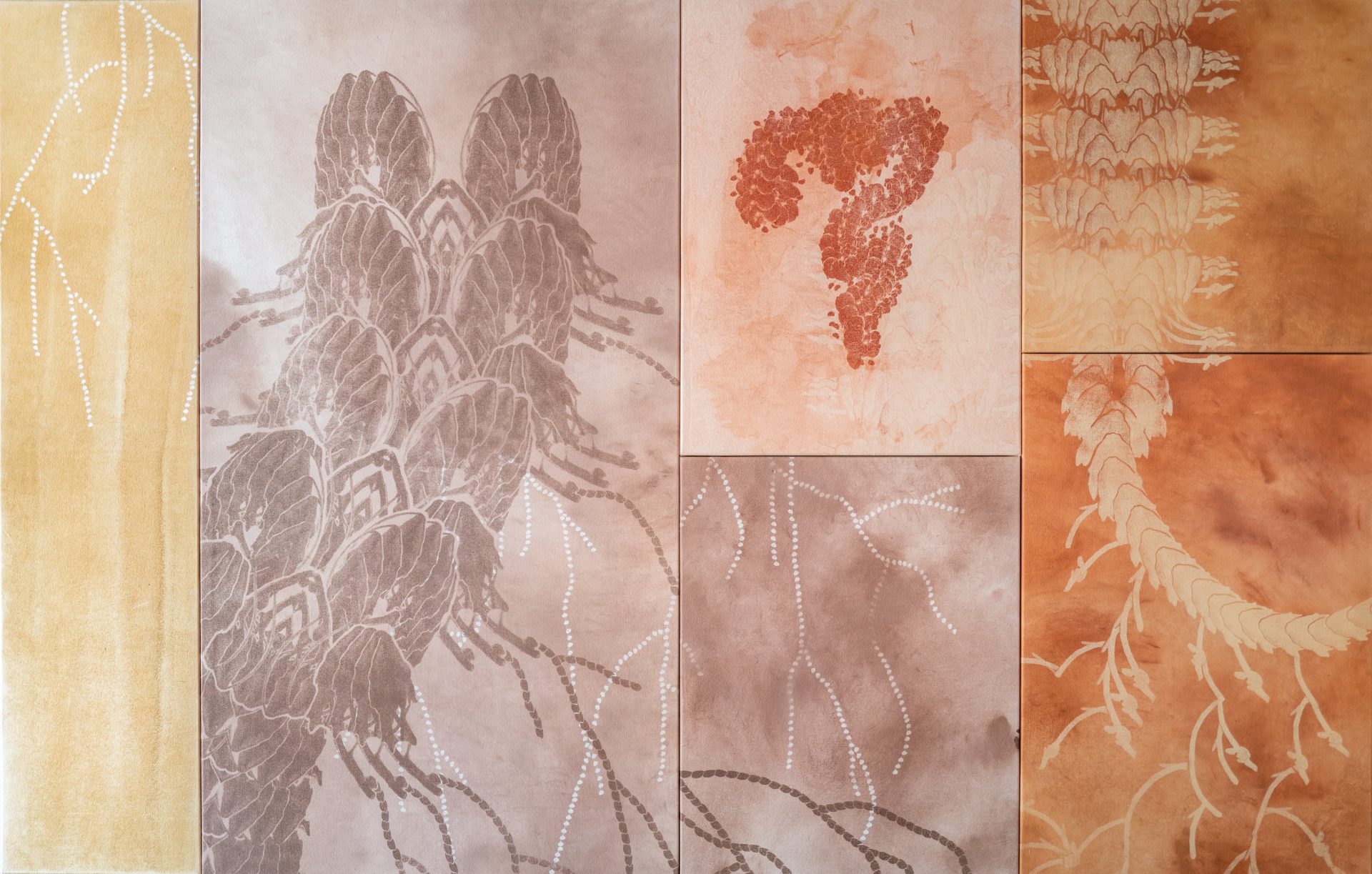
Rhizomorph 1 continues these interests, exploring root systems and mycelium as natural connectors between all living species in the soil. In a time of ecological and societal precarity, when intolerance and isolation are increasingly present, the artist sees these often hidden and organic networks as symbols of how we could connect with one another beyond our differences. Beneath the surface, the mycelium reaches out to different species, creating a shared ecosystem built on communication and exchange, balance and interdependence. The forms in Katamso’s work are drawn from microscopic observations of grass roots, and hand-printed with soil pigments. Their shadowy silhouettes, inspired by animistic figures from Balinese and Javanese culture, have a primordial quality akin to cave paintings, recording the new myths of our time.
Ines Katamso (b. 1990) is a French-Indonesian artist who works with natural materials such as soil and botanical forms, engaging in slow, process-based methods to examine the spiritual and ecological entanglements between humans and their environments. Rooted in animist cosmologies and vernacular knowledge, particularly from Javanese and Balinese traditions, her work reimagines land not as passive backdrop, but as narrator, and a sentient archive of memory and identity. Her work spans sculptural installations, paintings, and living systems, often in collaboration with local communities and ecological networks. Recent presentations include “Thresholds” at White Cube, Hong Kong (2025), the Biennale de Lyon (2024), ArtJog (2024), and an upcoming participation in the Jakarta Biennale (2026).
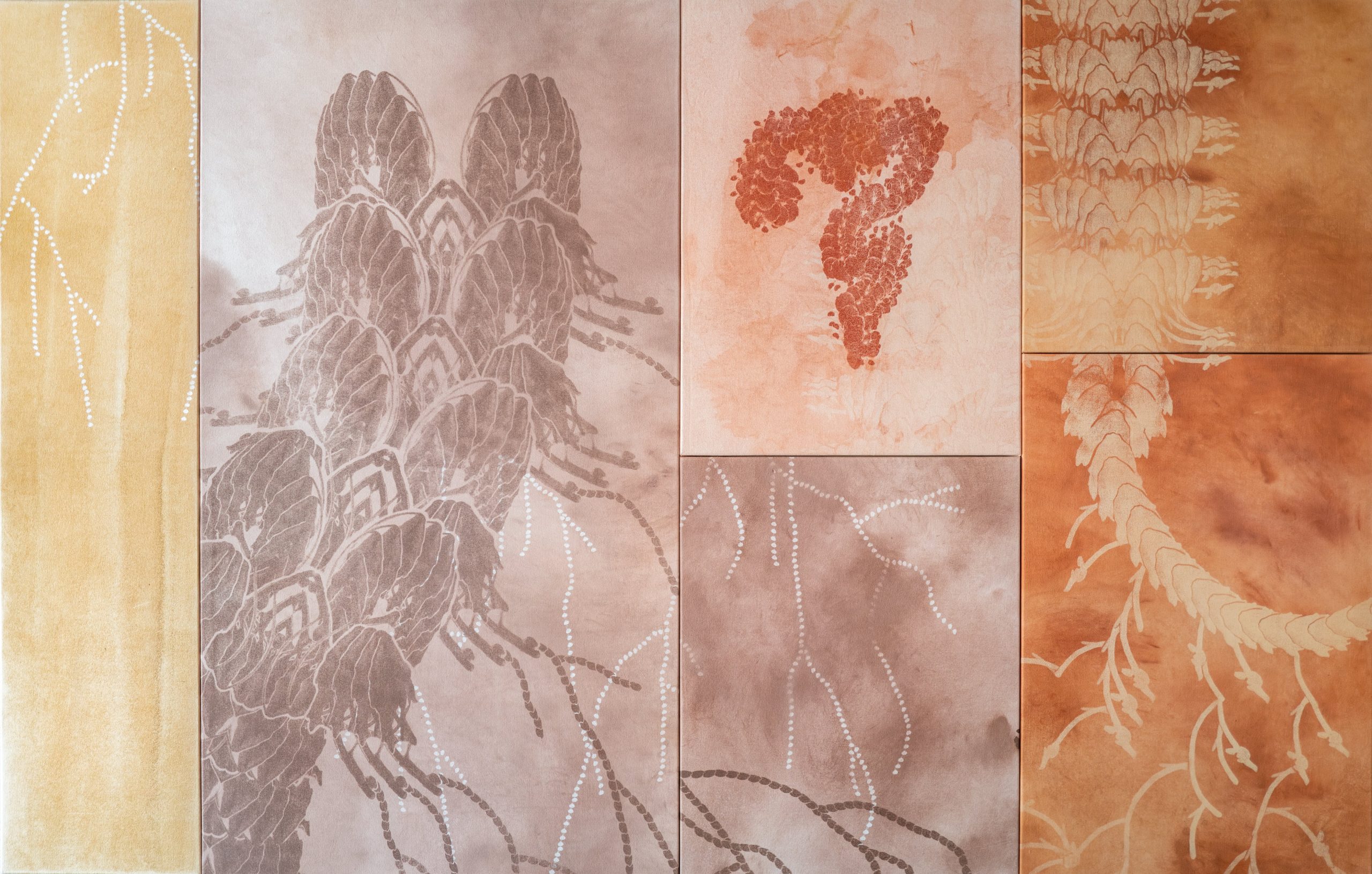
Ines Katamso
Rhizomorph 1
2025
Soil (Greece, Java, Bali, Vietnam, France) on cotton
175 × 112 cm
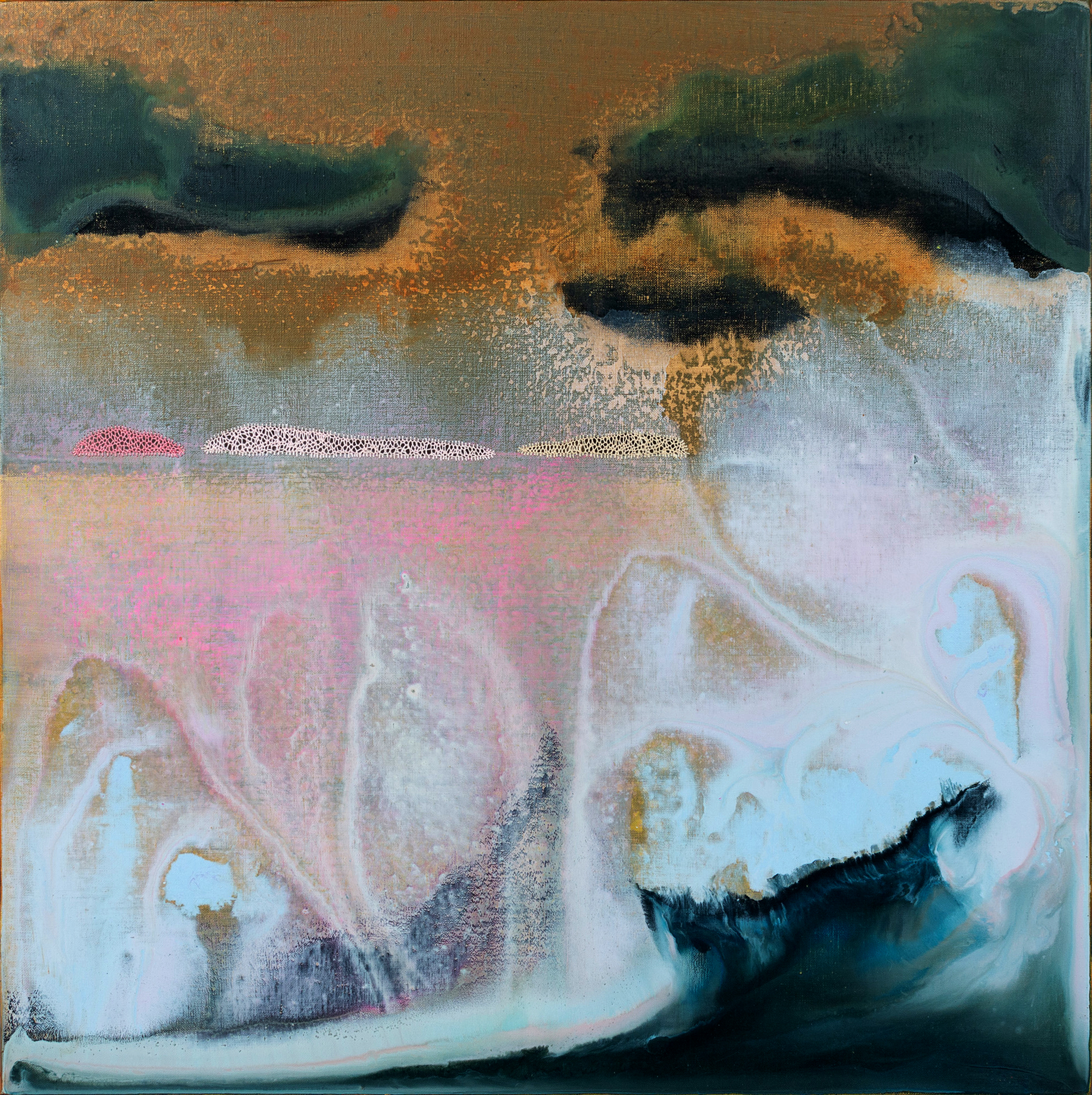
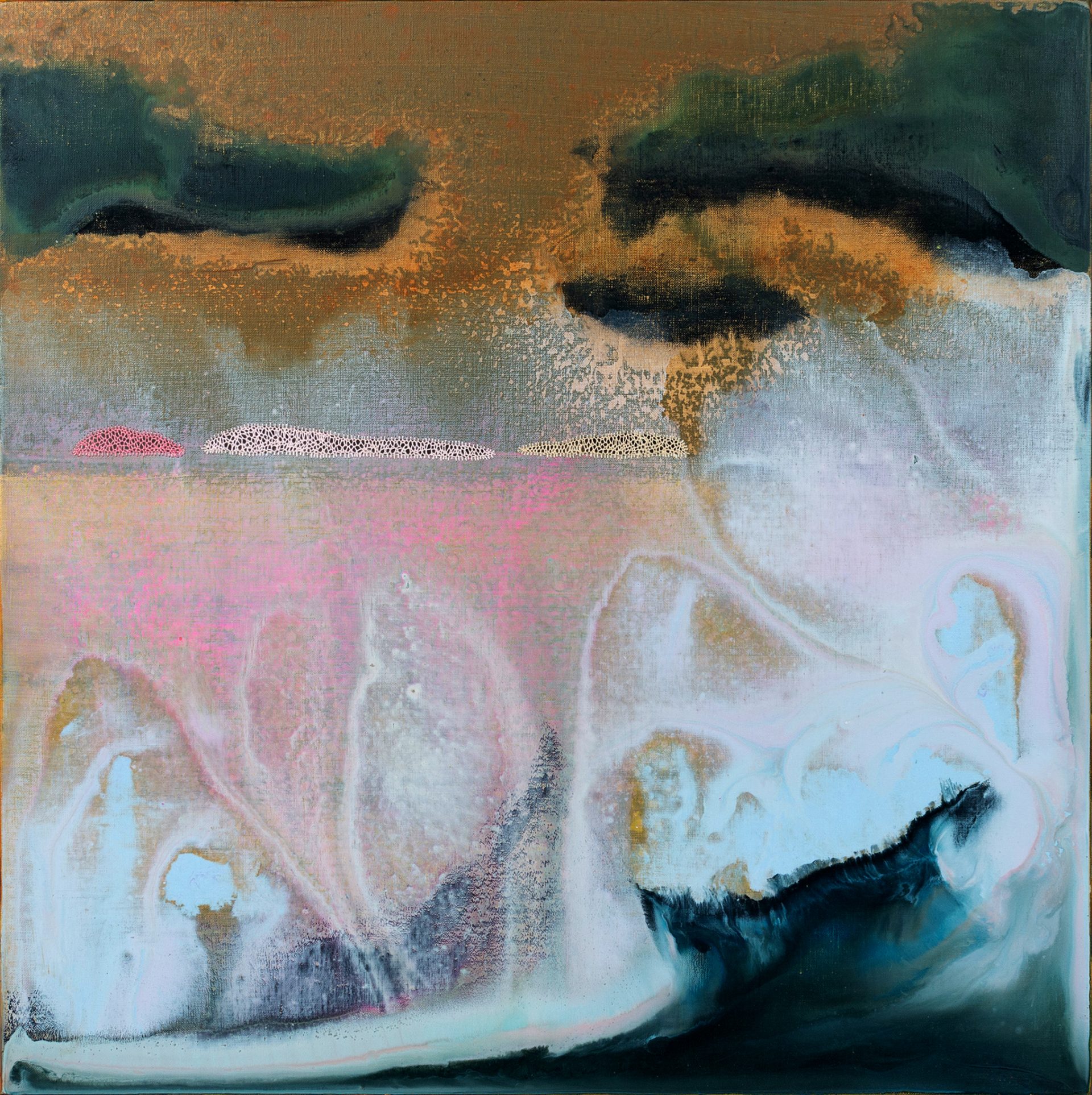
Morakot Ketklao
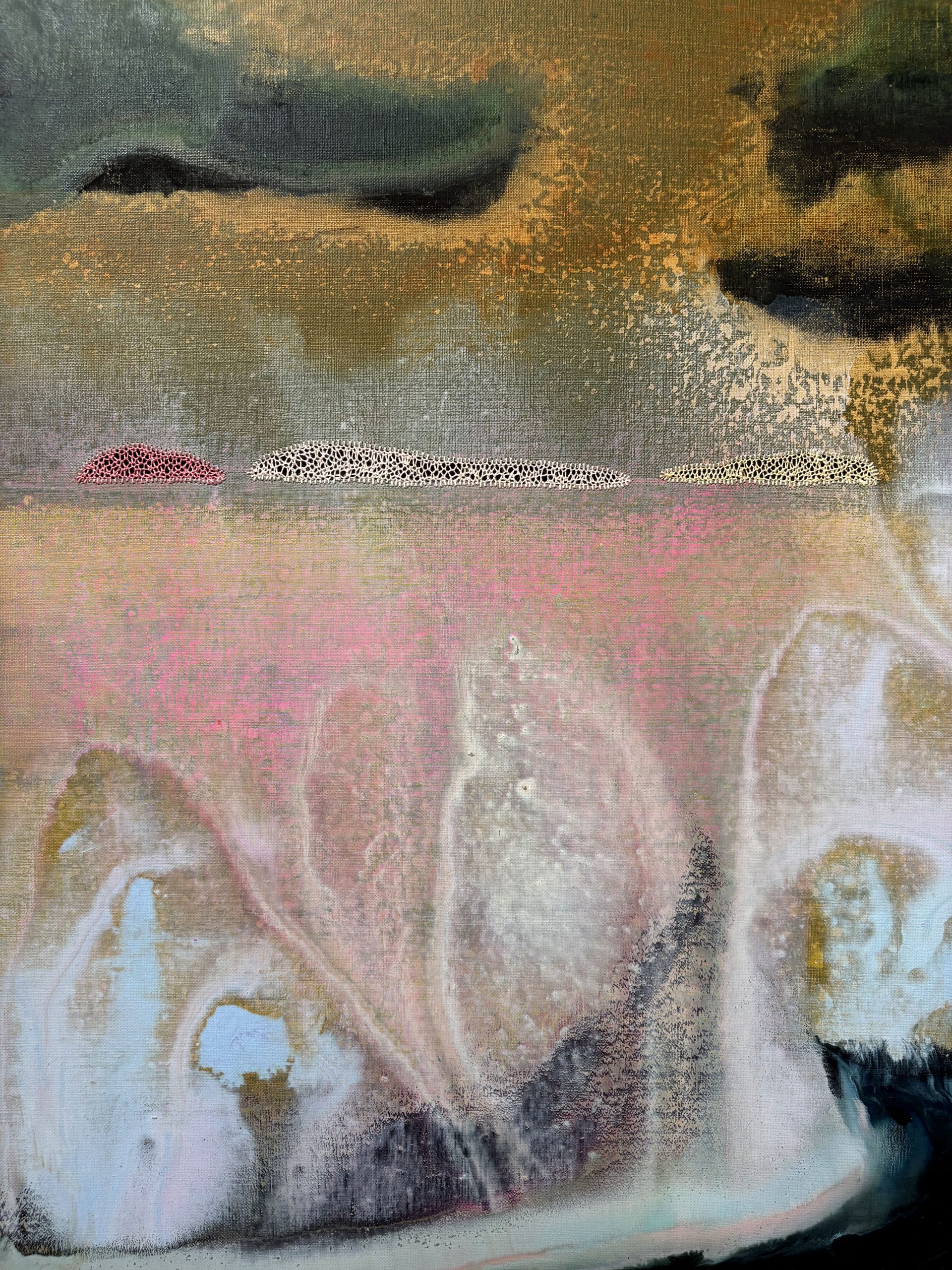
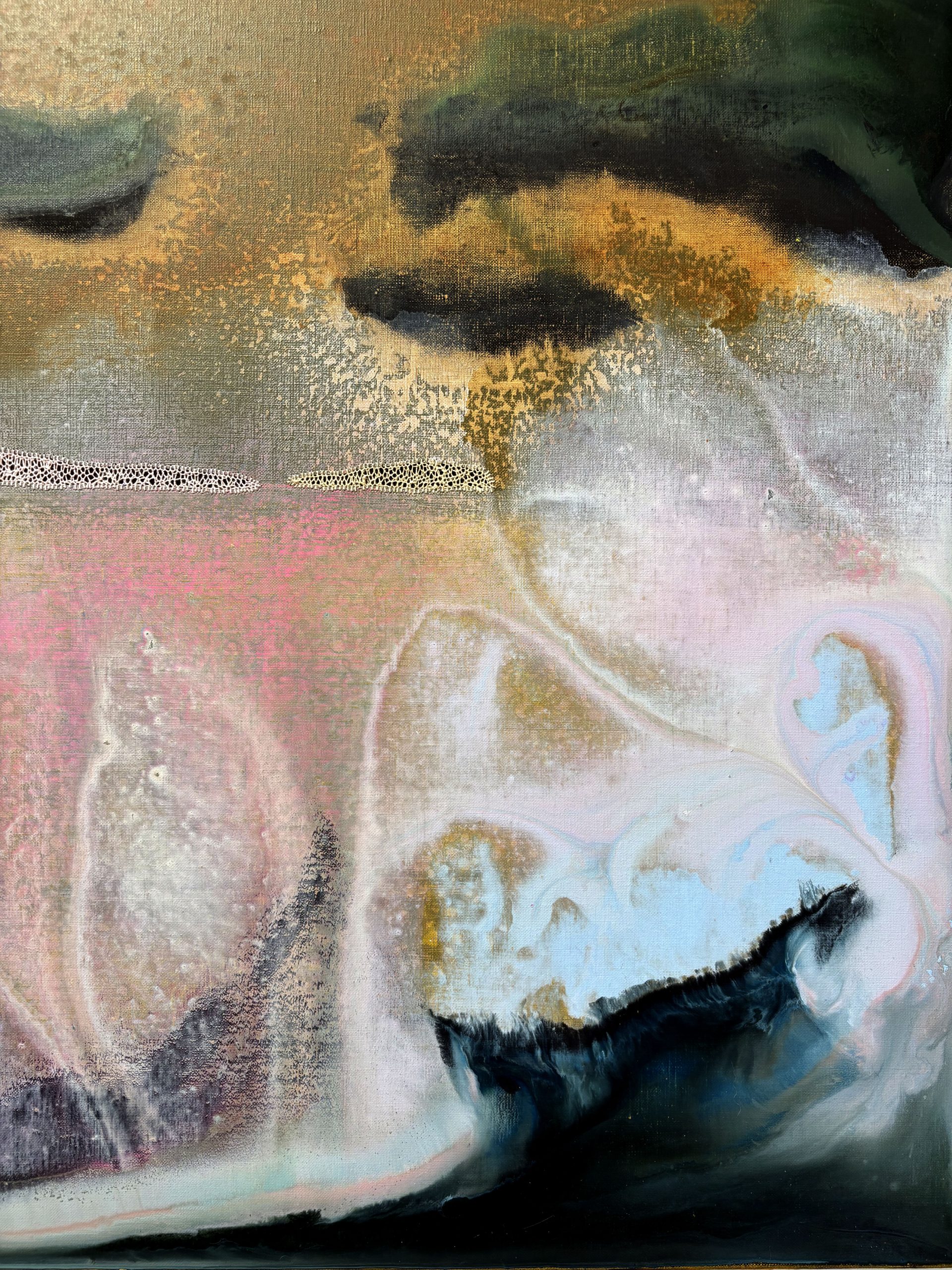
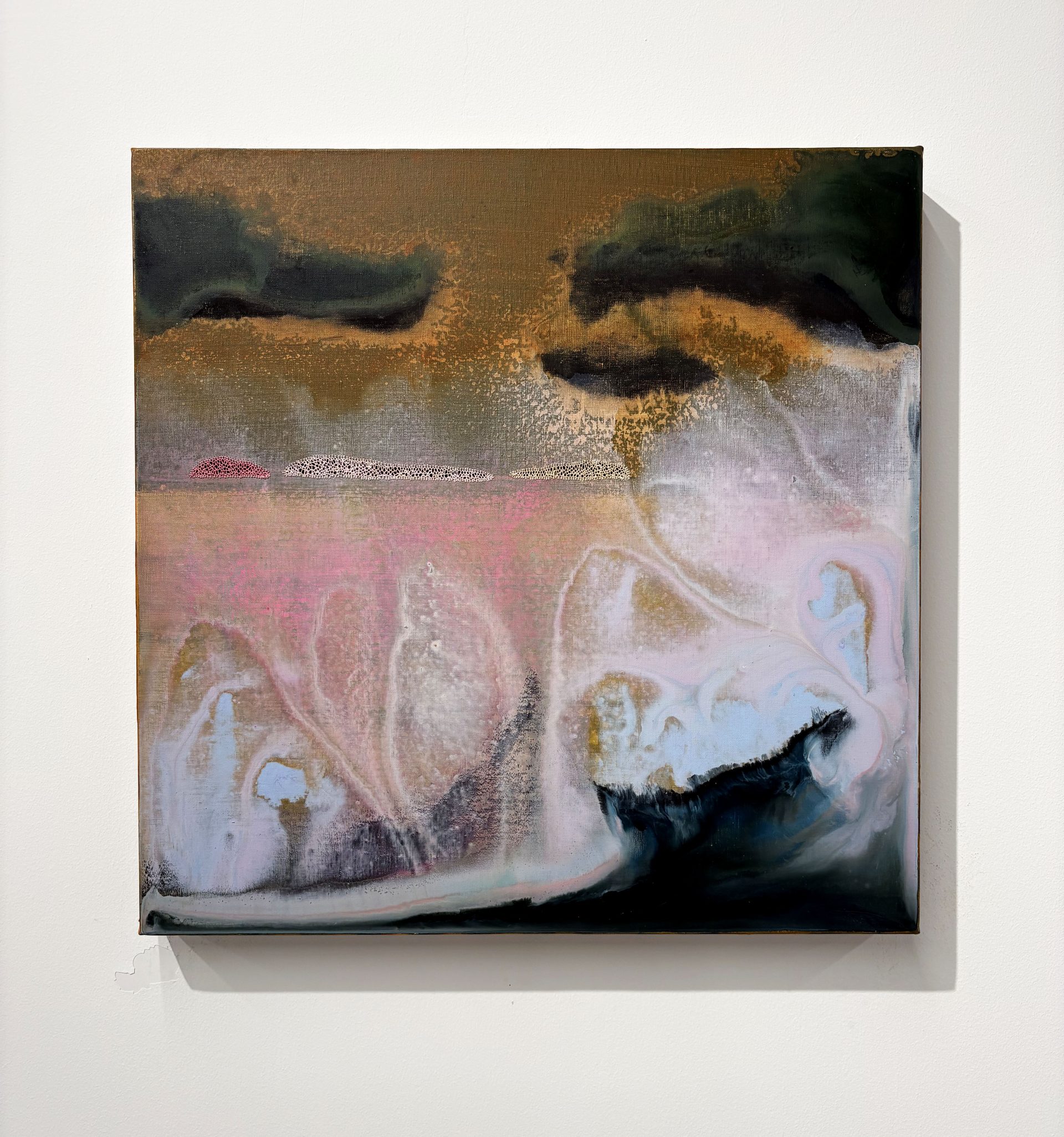
Windy Day
2024
Acrylic and thread on linen
60 x 60 cm
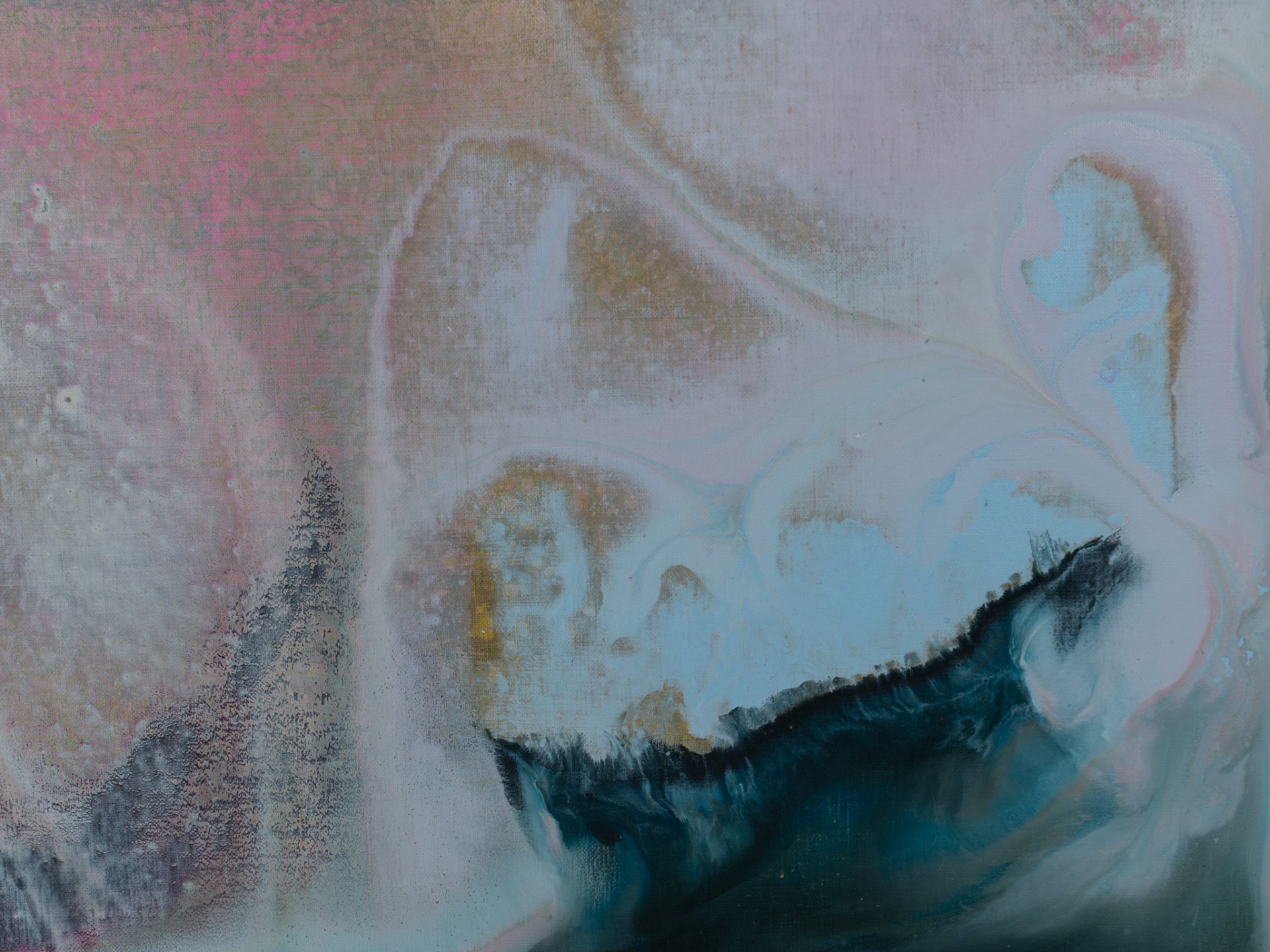
Windy Day evokes the restless atmosphere of a day shaped by unseen currents of air, where colour and form shift as if carried by the wind. The broad swathes of paint swirl and flow across the canvas like the weather itself – fleeting, unpredictable, and alive. Boundaries between sky, land, and water dissolve, suggesting a landscape that cannot remain fixed, but instead bends, stretches, and transforms. In this way, the landscape becomes a metaphor for endurance amid constant change. The wind, although invisible, leaves palpable traces of its force; it unsettles but also renews. Thread stitched into the canvas, mirrors this condition of vulnerability and strength – a reminder that turbulence can also open space for adaptation, hope, and continuity.
Morakot Ketklao (b. 1971) is an artist based in Chiang Mai, Thailand, who explores connections between the personal and shared experience of global climate change. A keen and sensitive observer of nature, Ketklao relates the nuances and subtleties of her immediate environment to those of our ever-changing planet through abstract forms. Her emotive visual language expresses her concerns about the loss of the natural world, while exploring themes of empathy and a collective mourning of nature in the age of the Anthropocene. Ketklao holds degrees from Chiang Mai University (Thailand), Silpakorn University (Thailand), and the Academe of Visual Art Leipzig (Germany). She also holds a Doctorate of Philosophy from Naresuan University (Thailand), and has exhibited her work at home as well as abroad in Vietnam, Germany, Austria, Sweden, Italy, Poland, Romania and Montenegro.
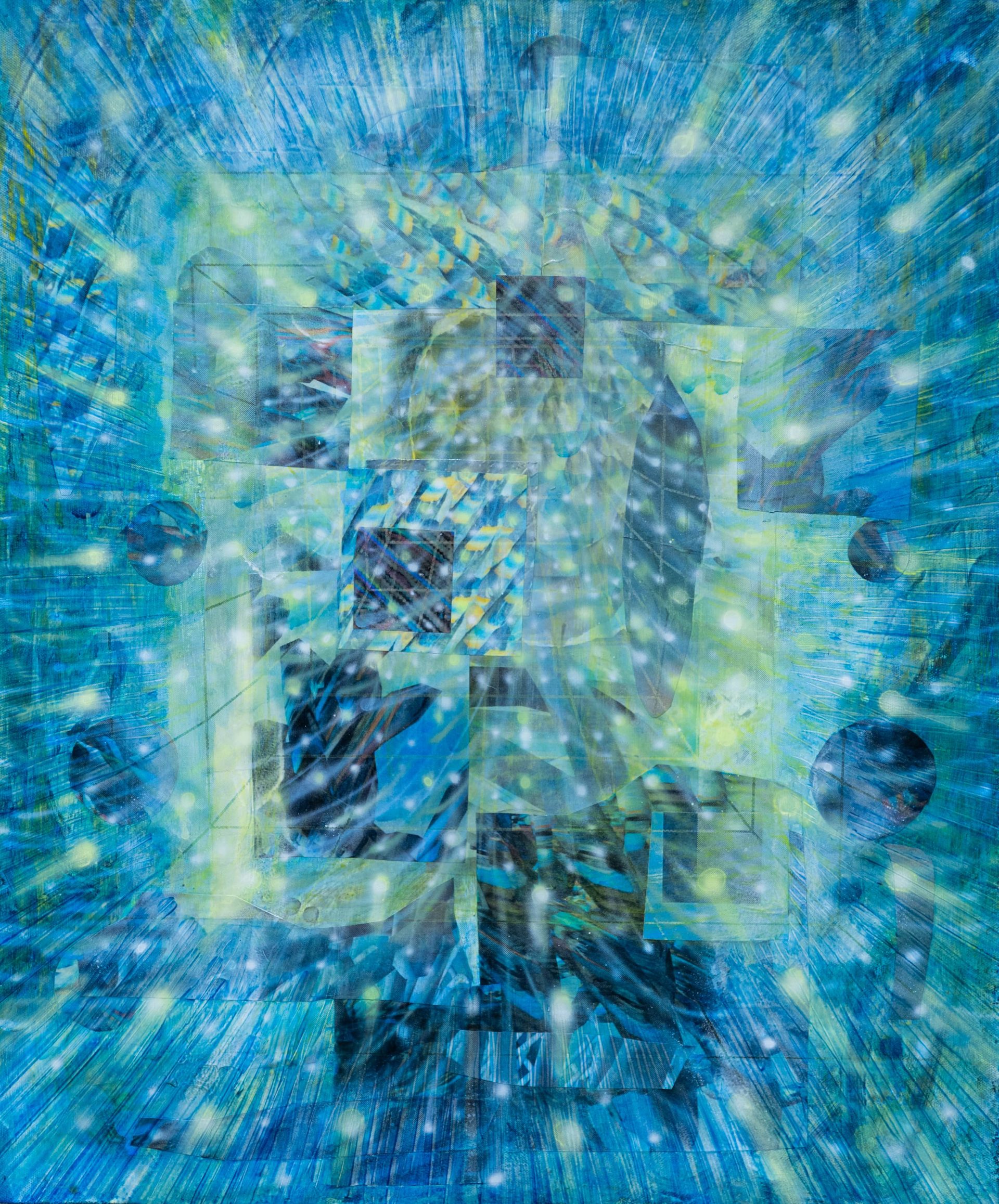
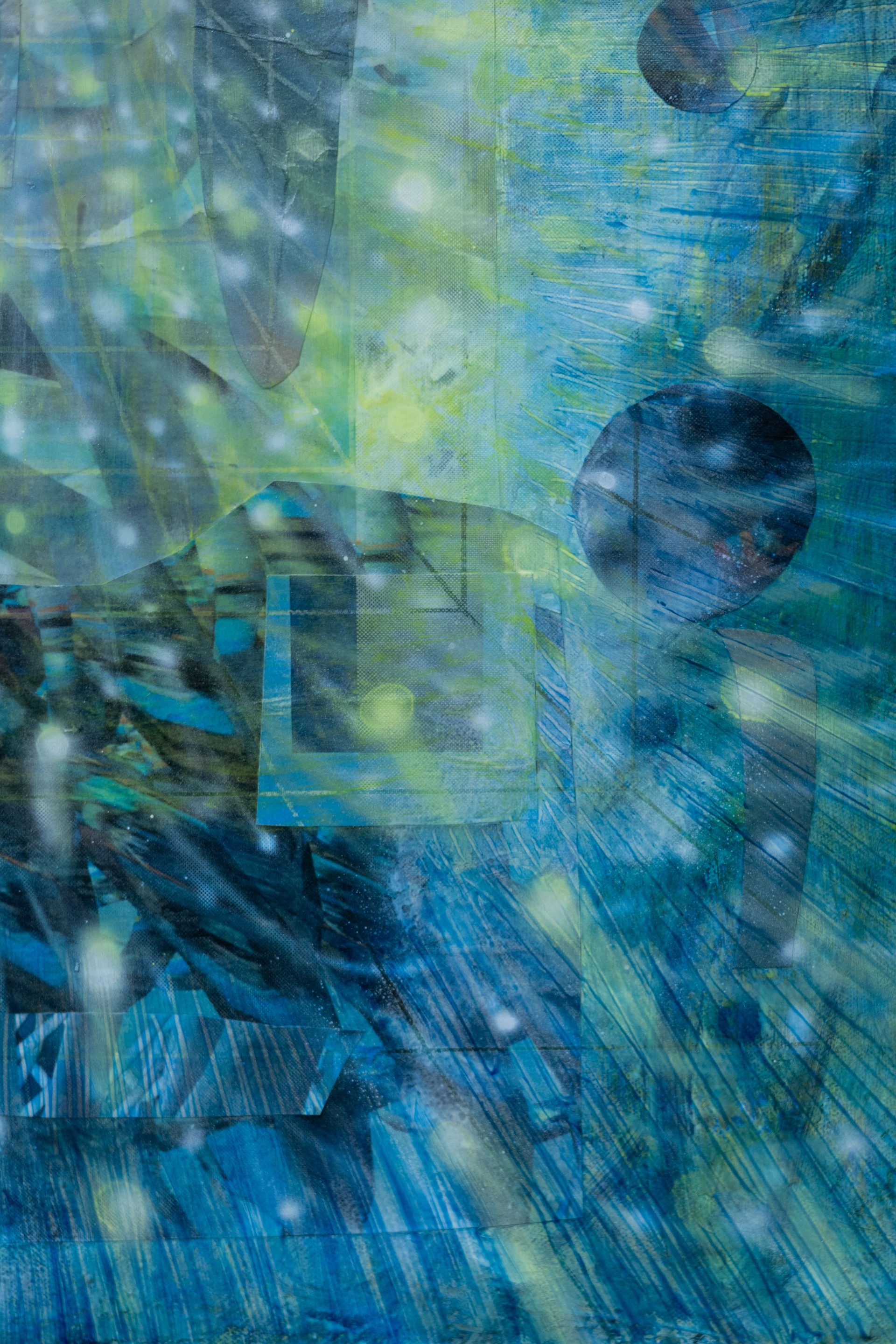
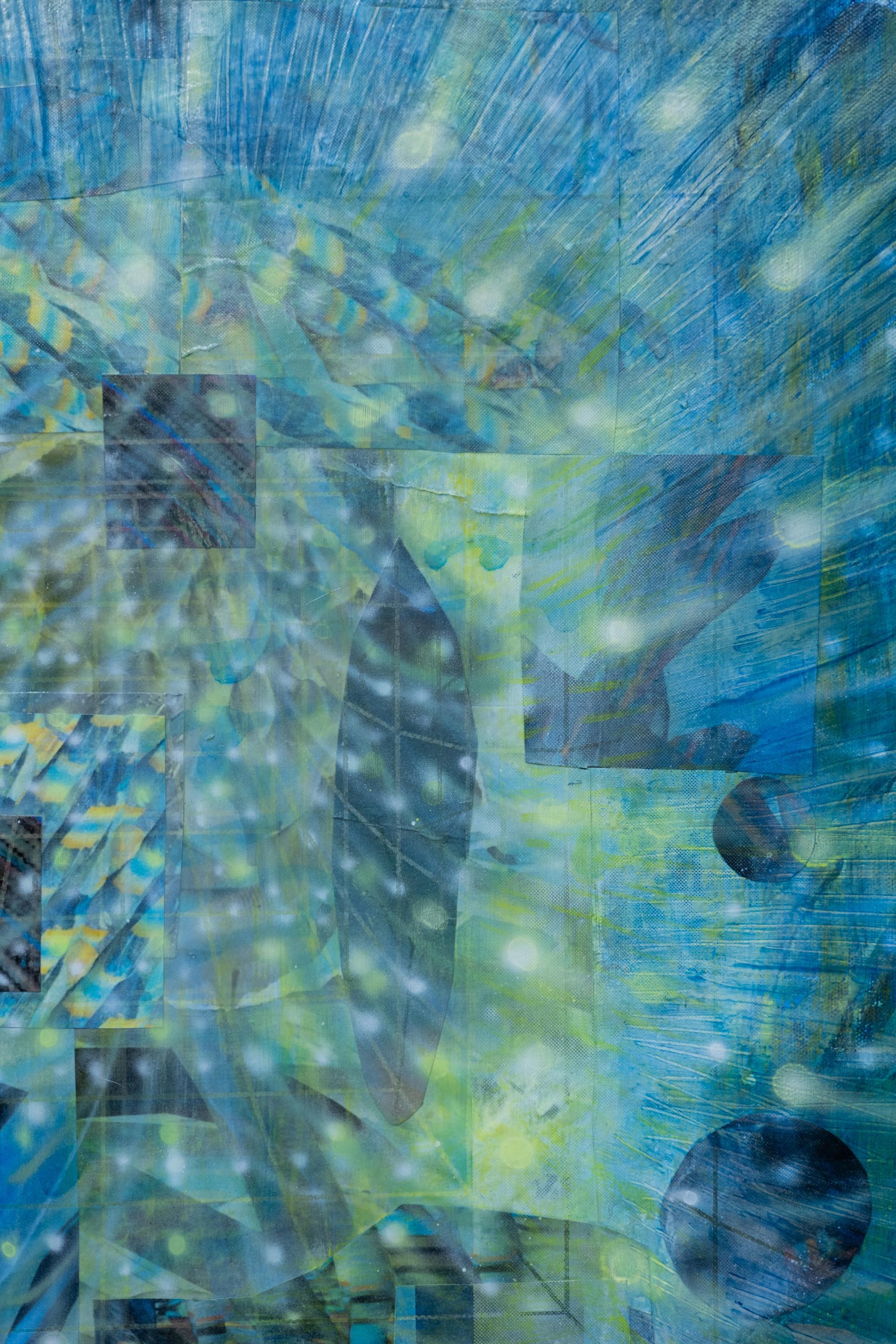
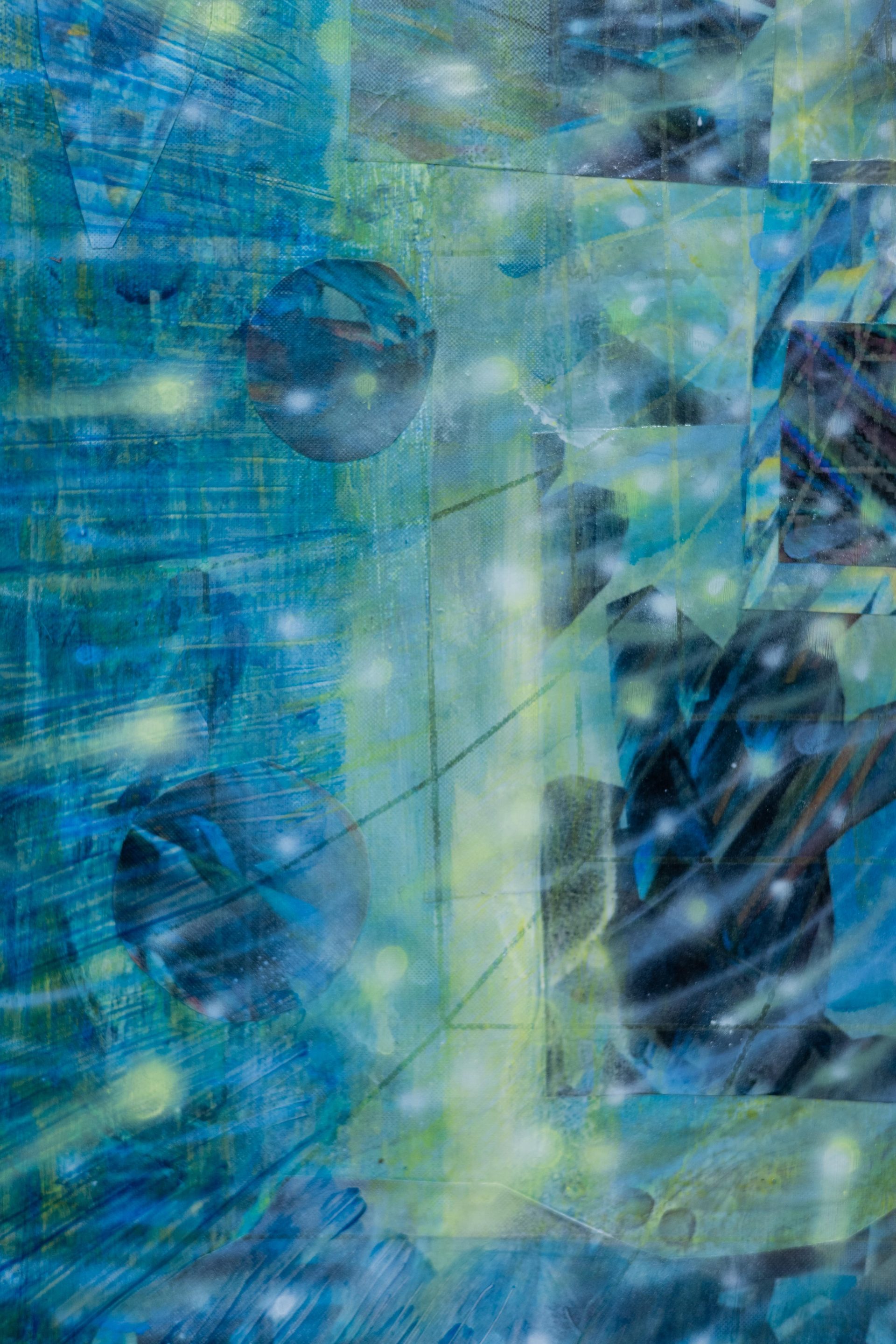
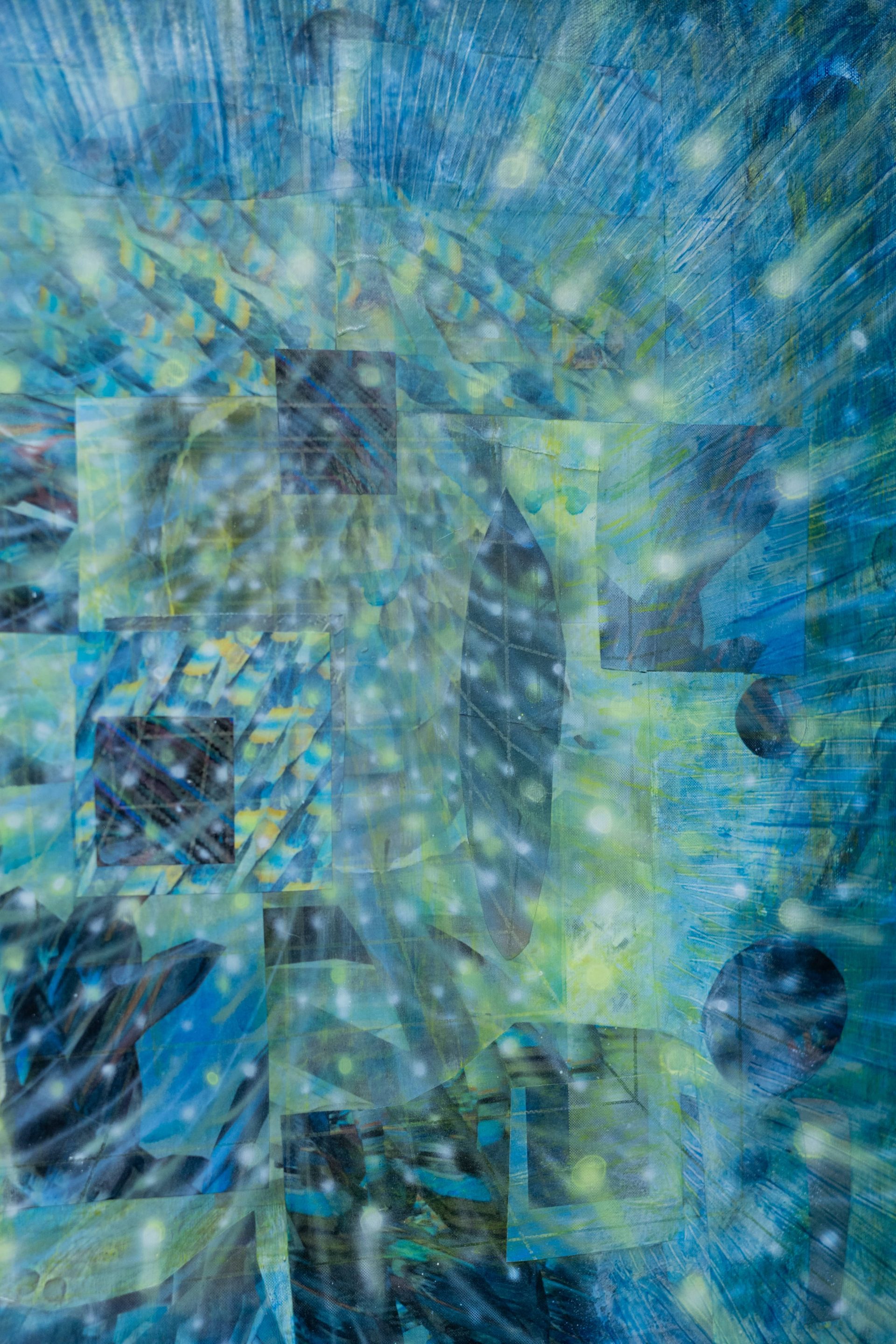
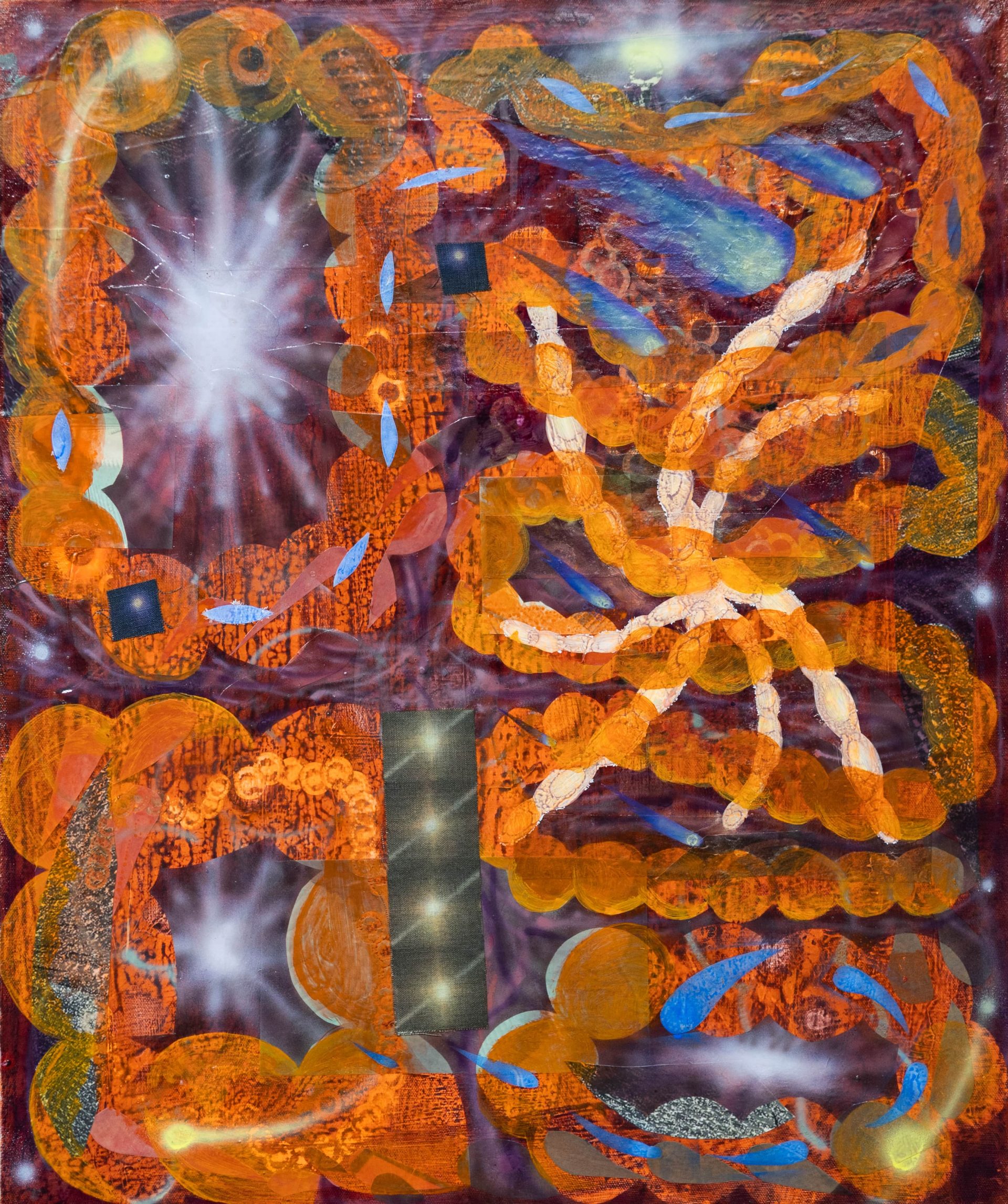
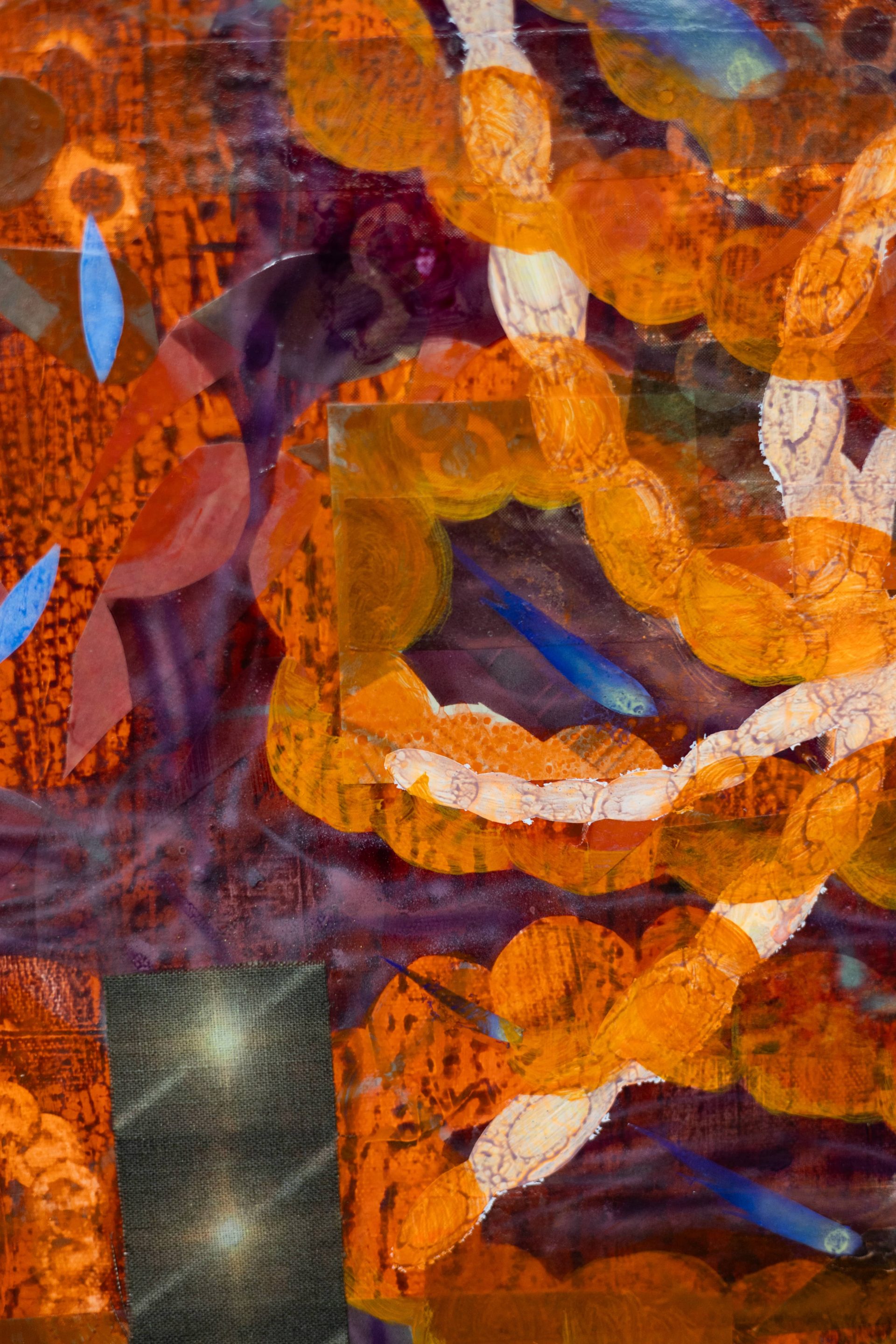
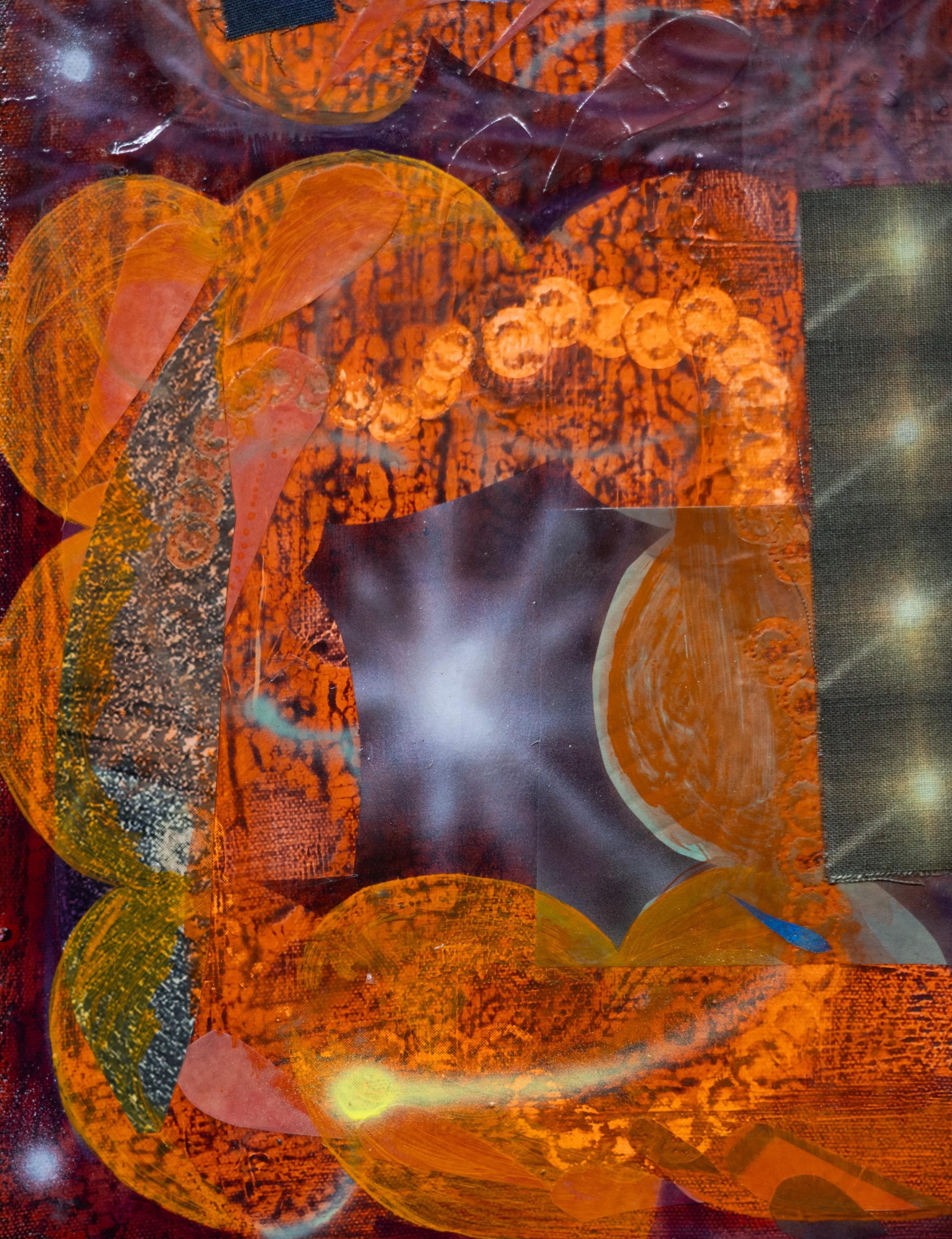
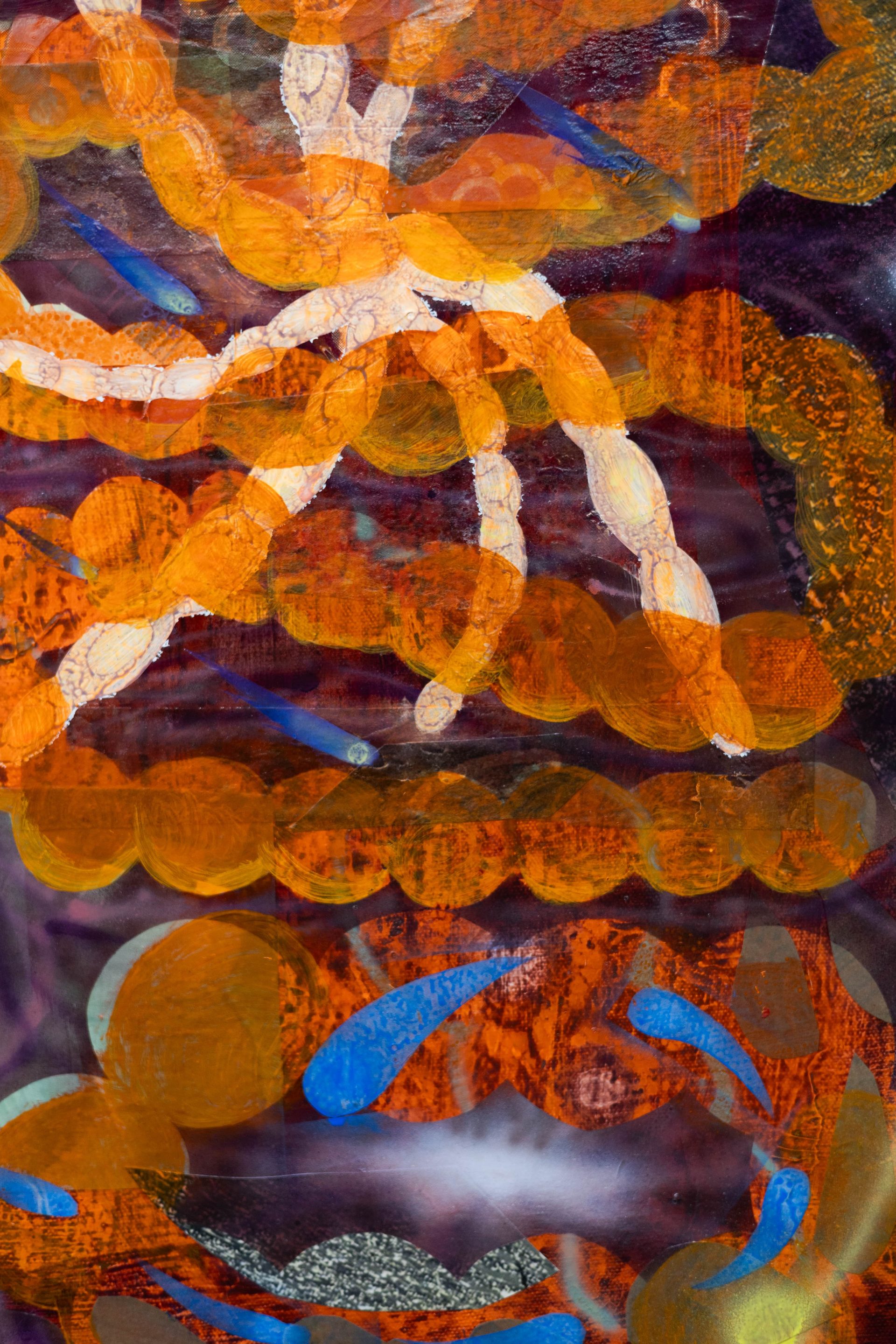
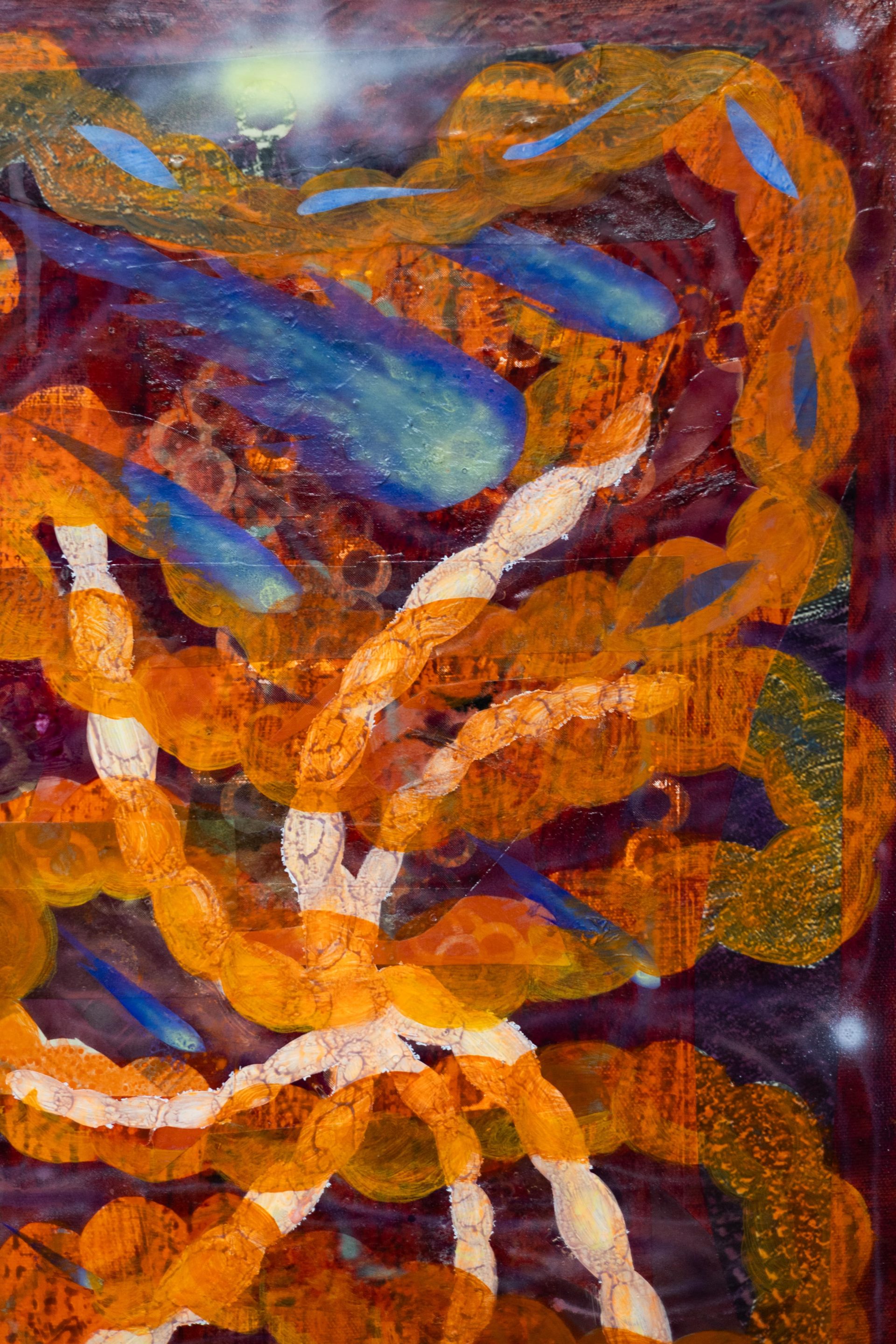
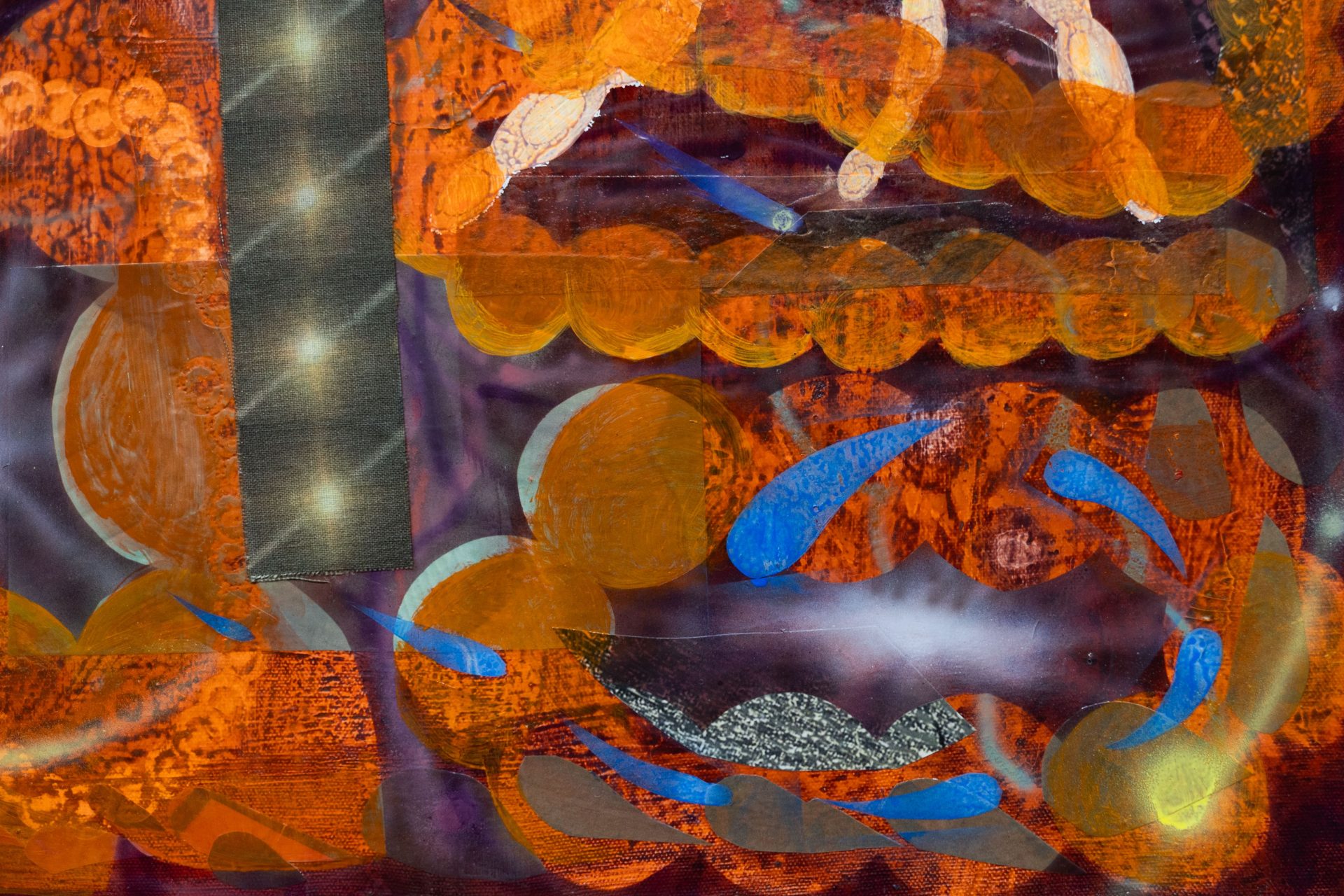
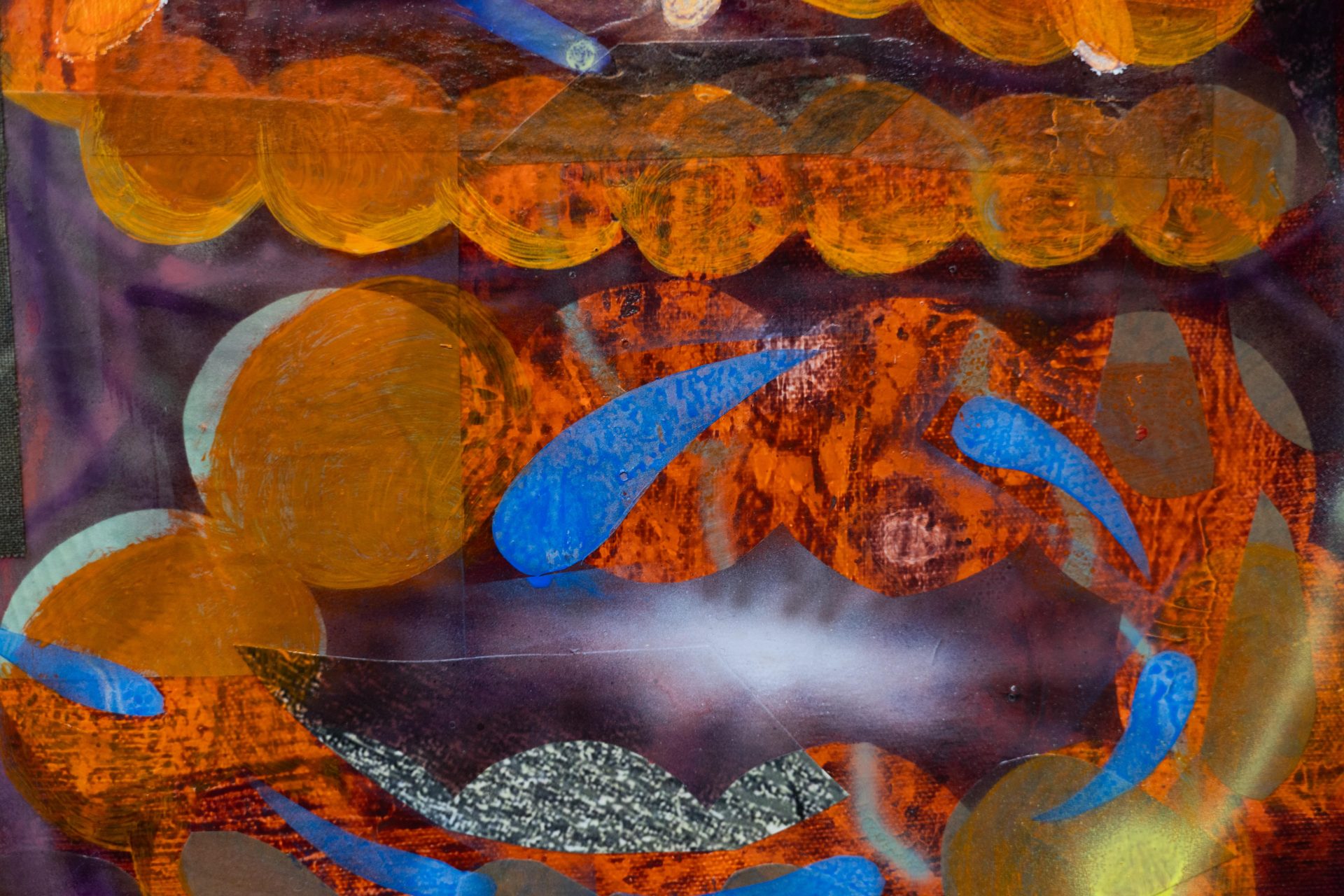
Ivan David Ng brings together painting, collage and generative technology, creating cosmic imagery that explores ancestry and time travel. A recent move to America prompted a deep searching into his Singaporean Hakka identity. Transplanted from an environment where he belonged to the ethnic majority to one where he had to contemplate his position as an alien guest, Ng drew parallels between the etymology of the Hakka ethnic group – the term ‘Hakka’ means ‘guest people’ – as well as the idea of asteroids and comets as ‘guest stars’ – the name given to these transient celestial events in ancient Chinese astronomy.
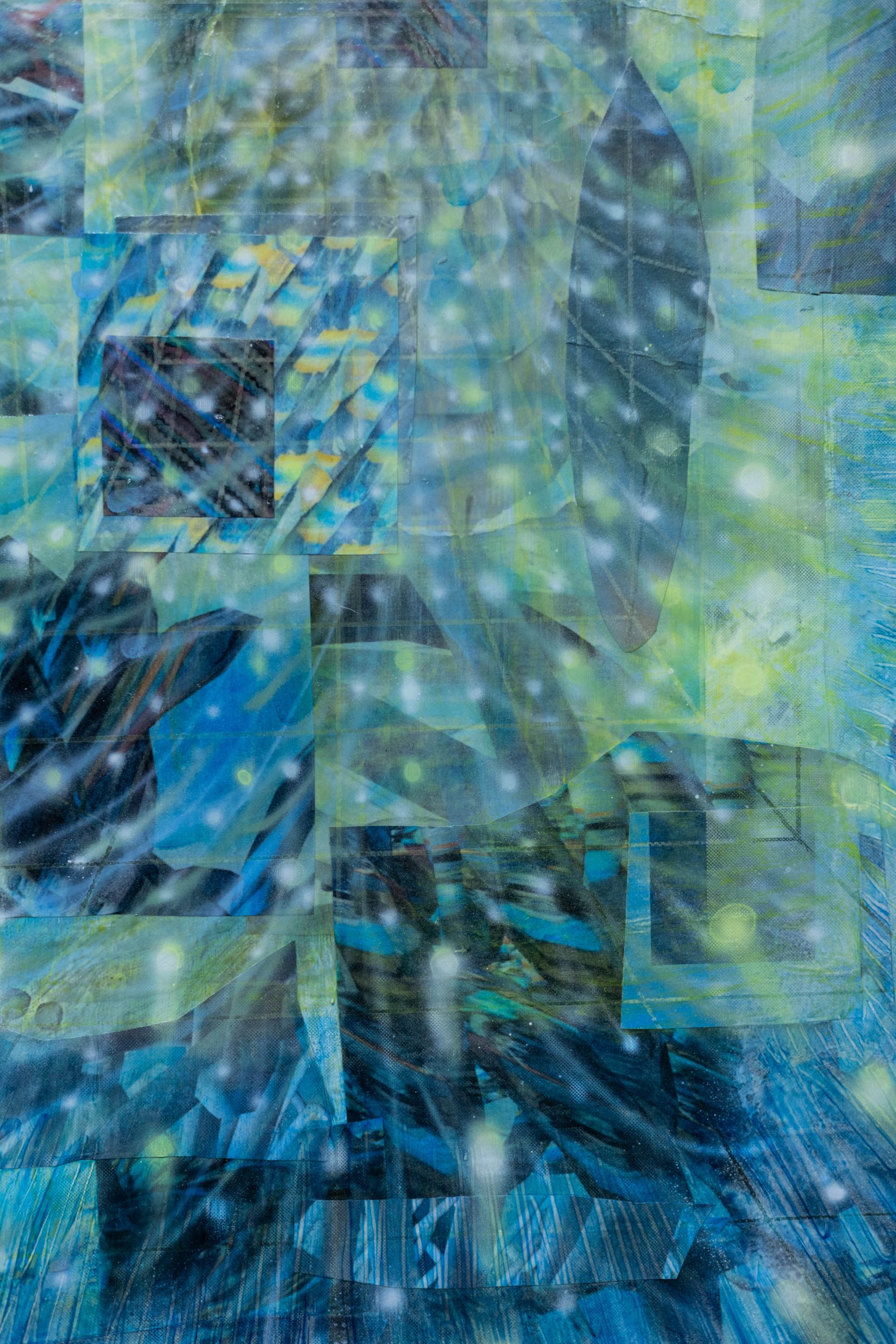
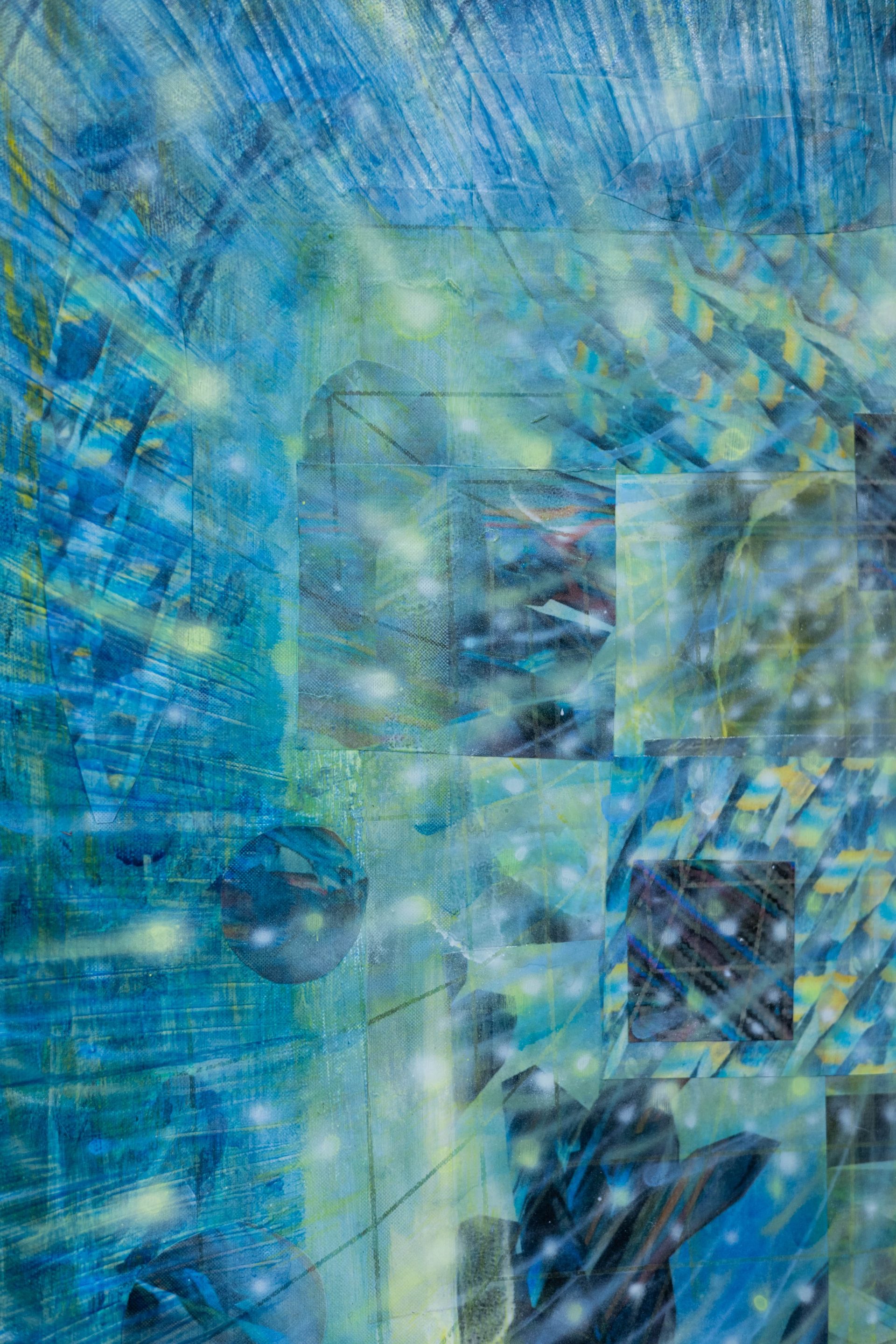
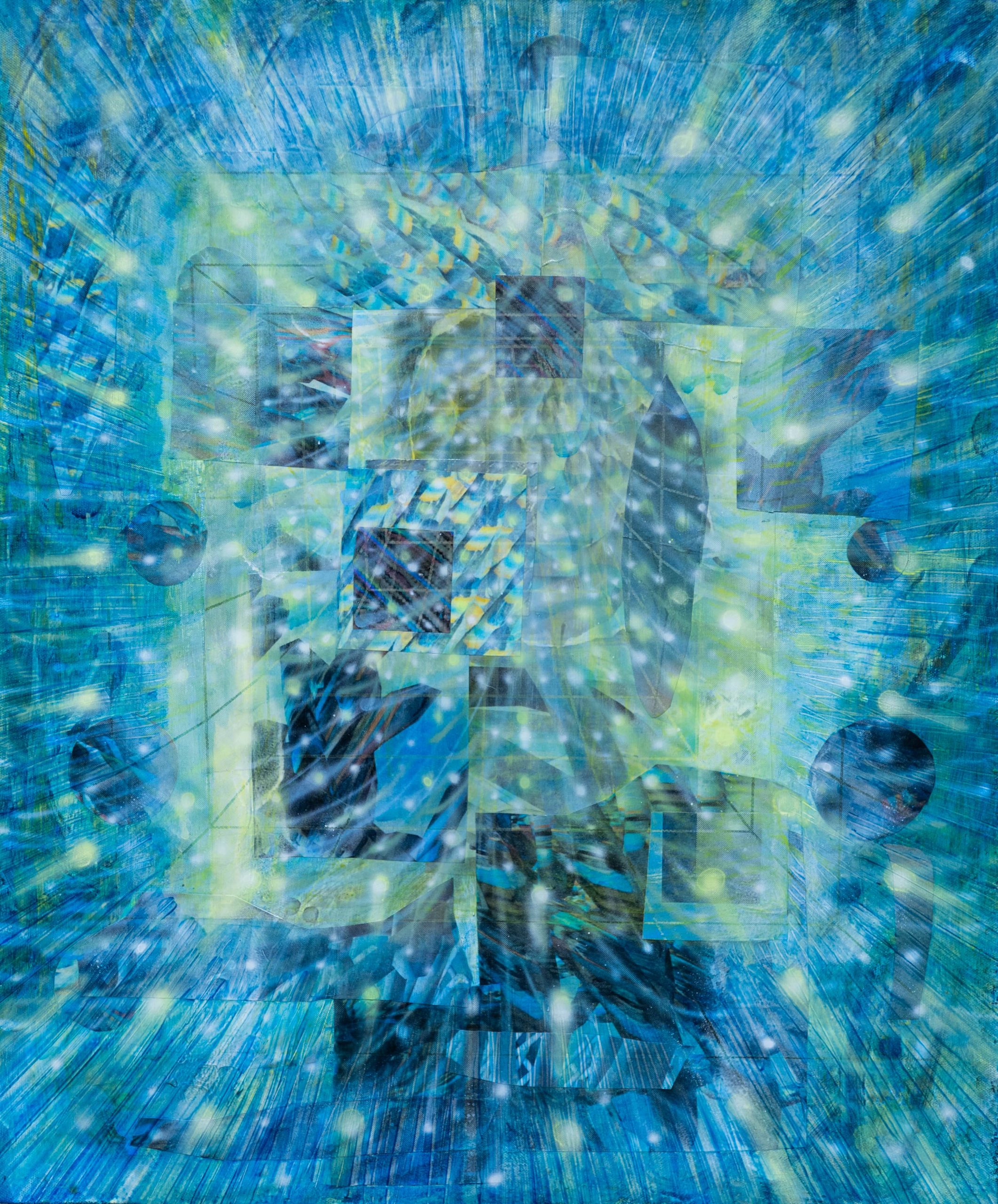
In Time travelling in Chinese, the work’s surface is composed from a collage of digital prints generated through an analysis of the artist’s bodily movements during the painting process – an imaging that Ng likens to “a stream of ancestral data emanating from the body”. A wormhole at the composition’s centre suggests a desire to go back in time, in order to know and to understand, and a swirl of glowing orbs rushes towards this portal, referencing both ‘guest stars’ (comets) as well as the ‘guest people’, both sojourners tracking parallel journeys across the earth and sky.
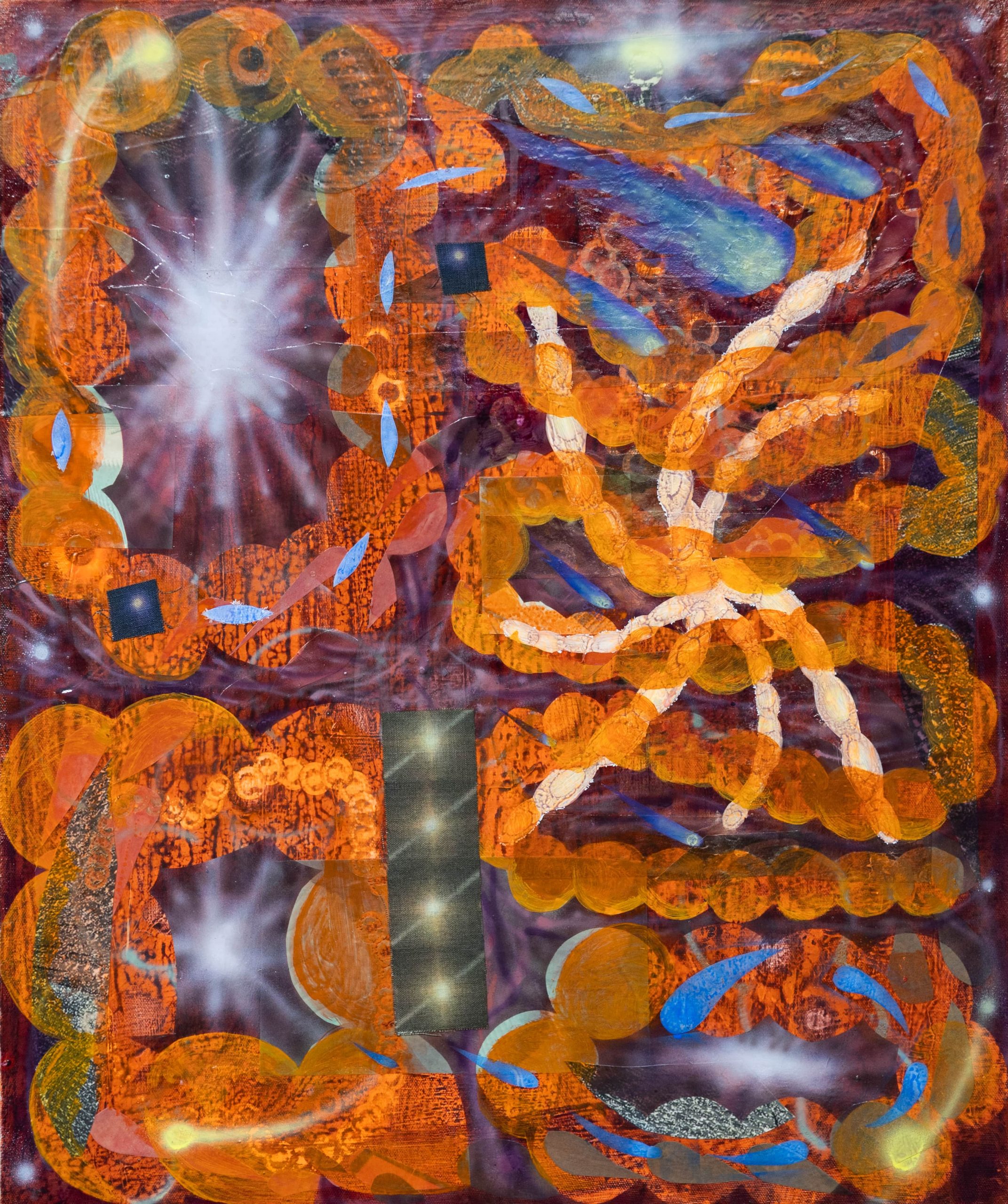
Ng notes that the human body also has a hidden celestial nature, with its essential building blocks of nitrogen, carbon and iron formed in the heart of stars. In Two scales of time in the body, Ng turns inwards, to intersect internal biology with astronomy. Images of supernovae are abstracted to form interlocking ovals, evoking the archetypal worm(hole) as well as the digestive organs, thus connecting the material body to cosmic time. Similar to its blue companion (Time travelling in Chinese), here, the particles travel through portals – bodily as well as celestial.
Ivan David Ng (b. 1991) is a Singaporean artist currently based in the US. His multi-approach practice, informed by a painter’s sensibilities, asks what it means to exist as a human, wedged between land and sky. He graduated in Painting Summa Cum Laude from the Maryland Institute College of Art, USA, and attended the prestigious Skowhegan School of Painting and Sculpture. Ng was awarded the UOB Painting of the Year Gold Award in 2020, and his work has been published in New American Paintings, a critically-acclaimed periodical that identifies exceptional artists and introduces their work to international audiences. Ng’s work has been exhibited in Singapore, South Korea, China and USA; he has also been commissioned by Louis Vuitton, Singapore Land Group, and Christian Liaigre.
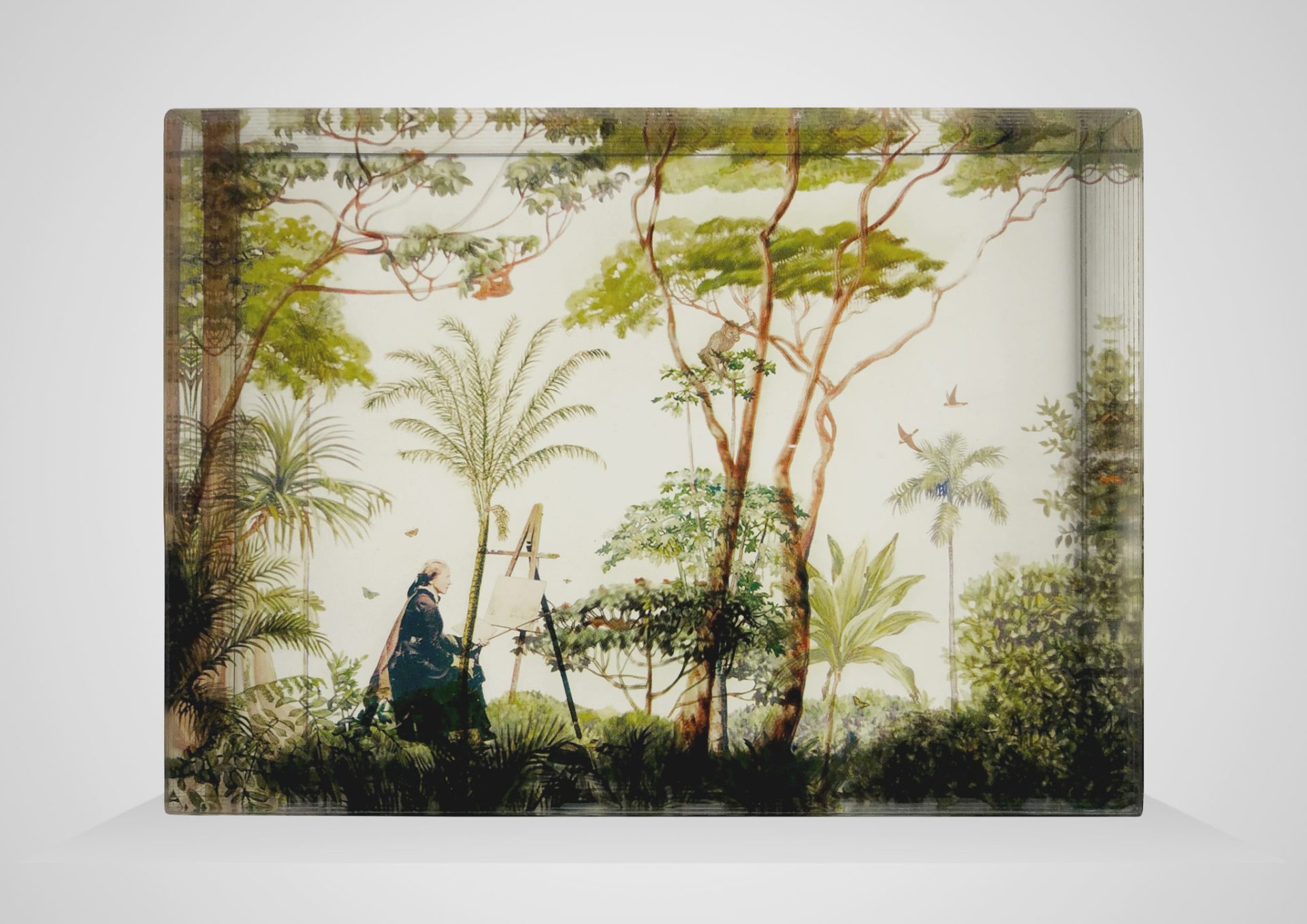
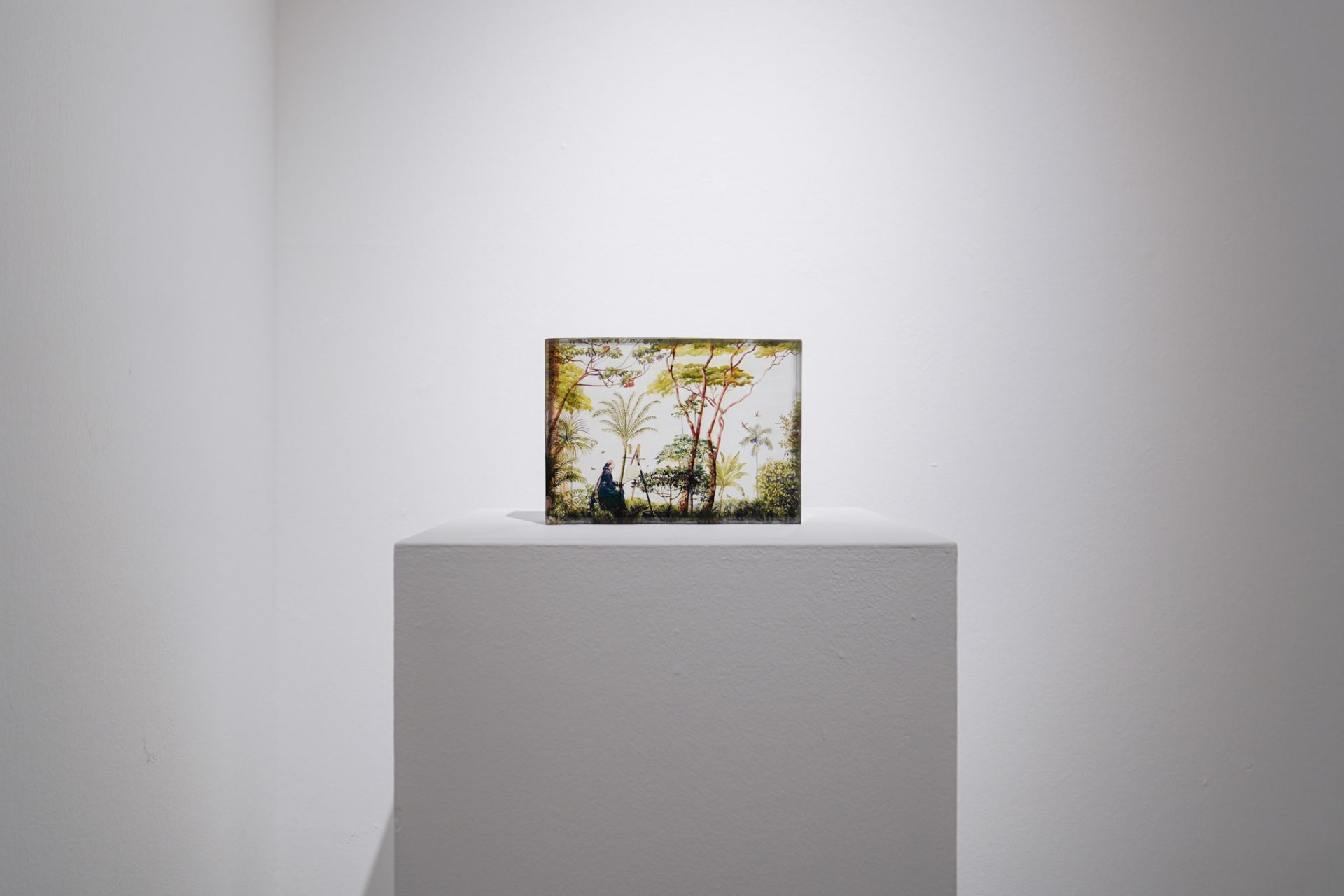
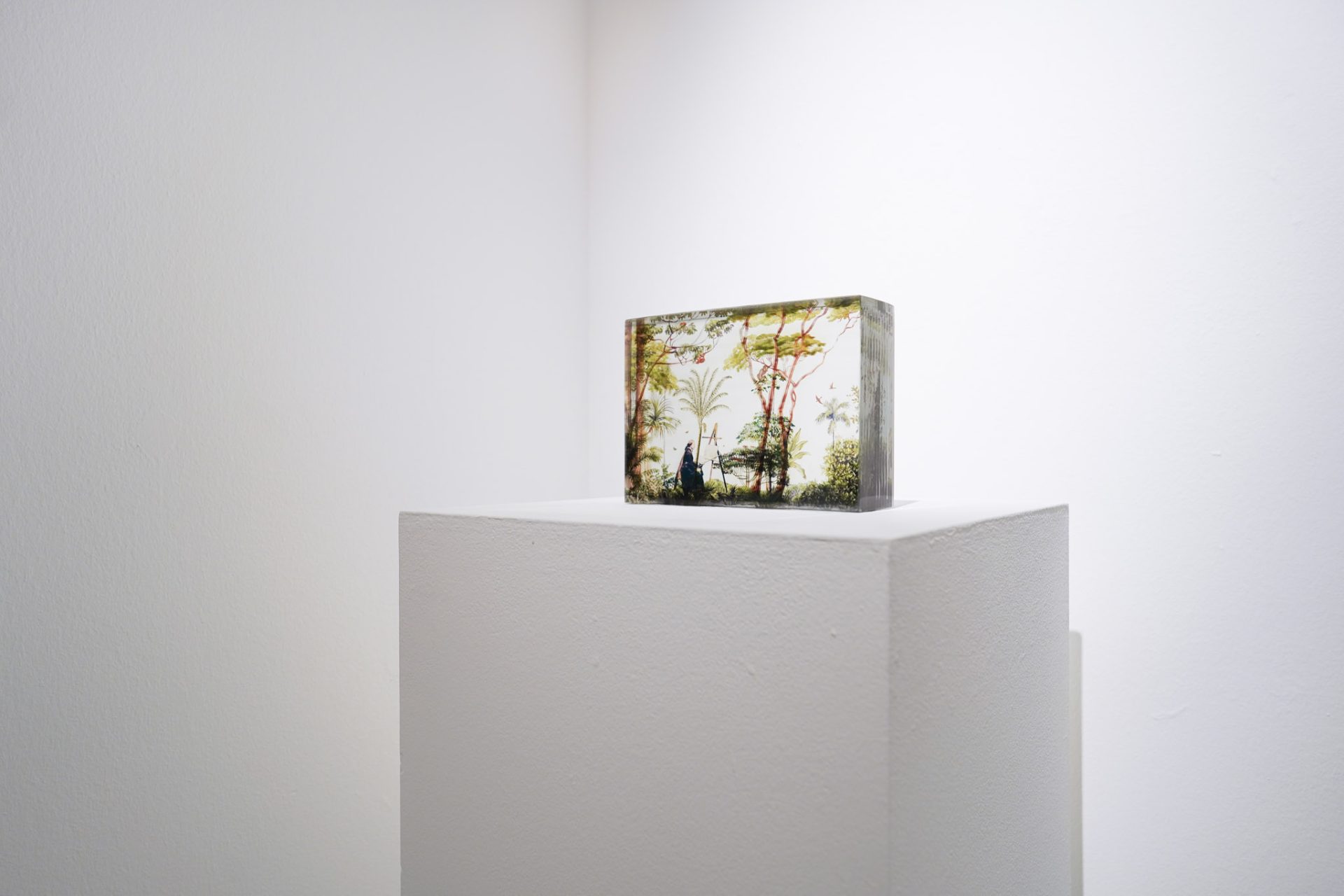
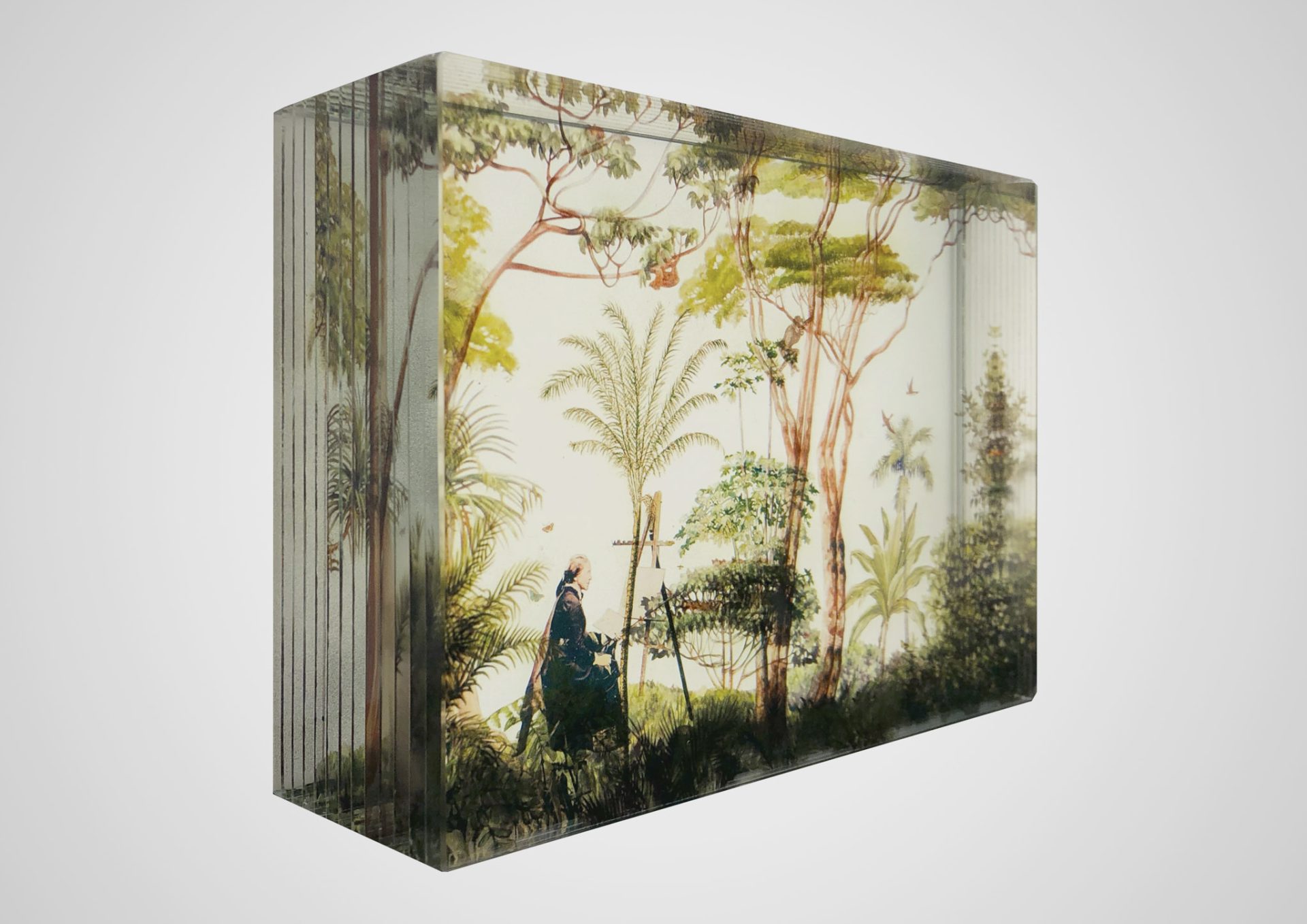
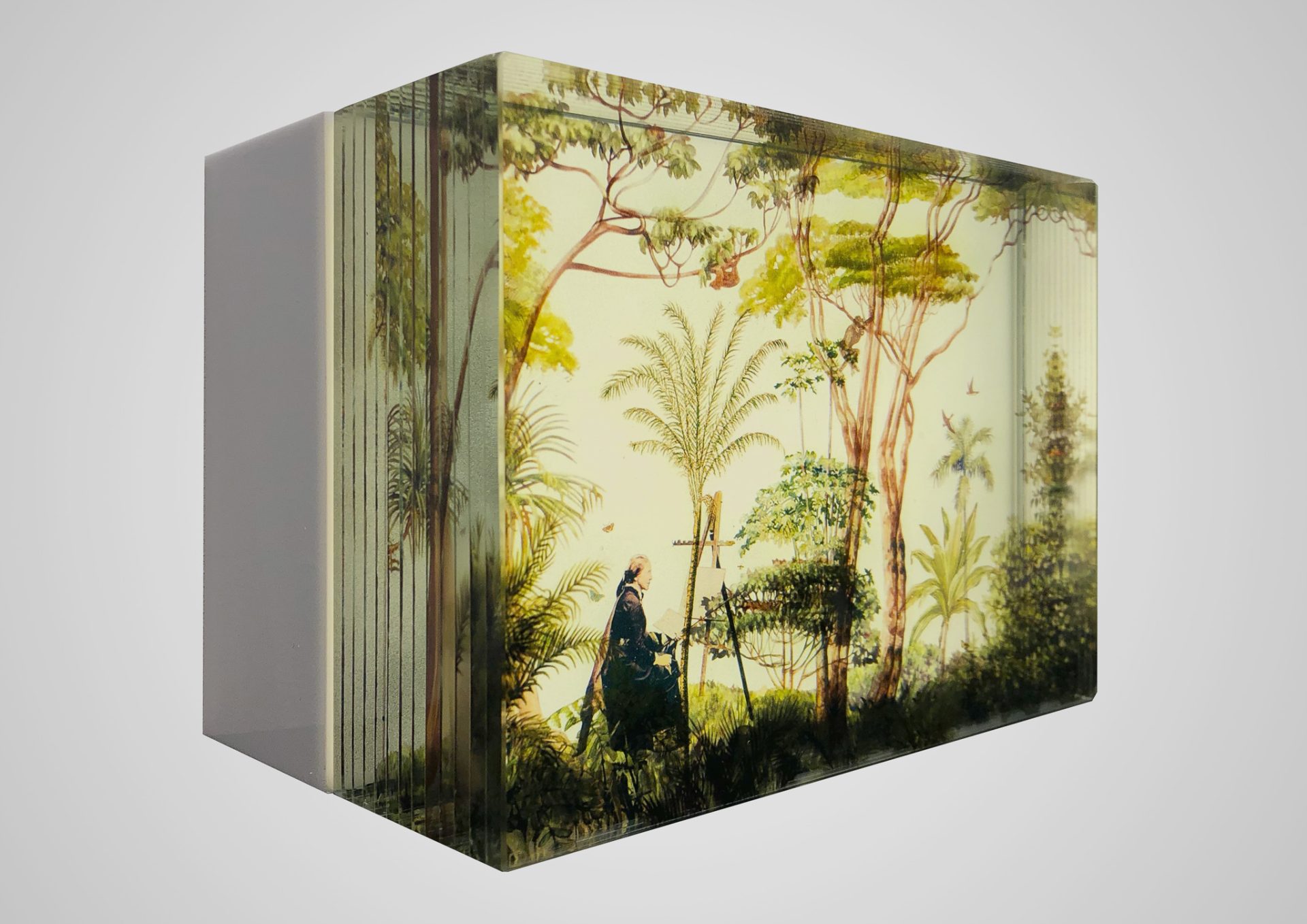
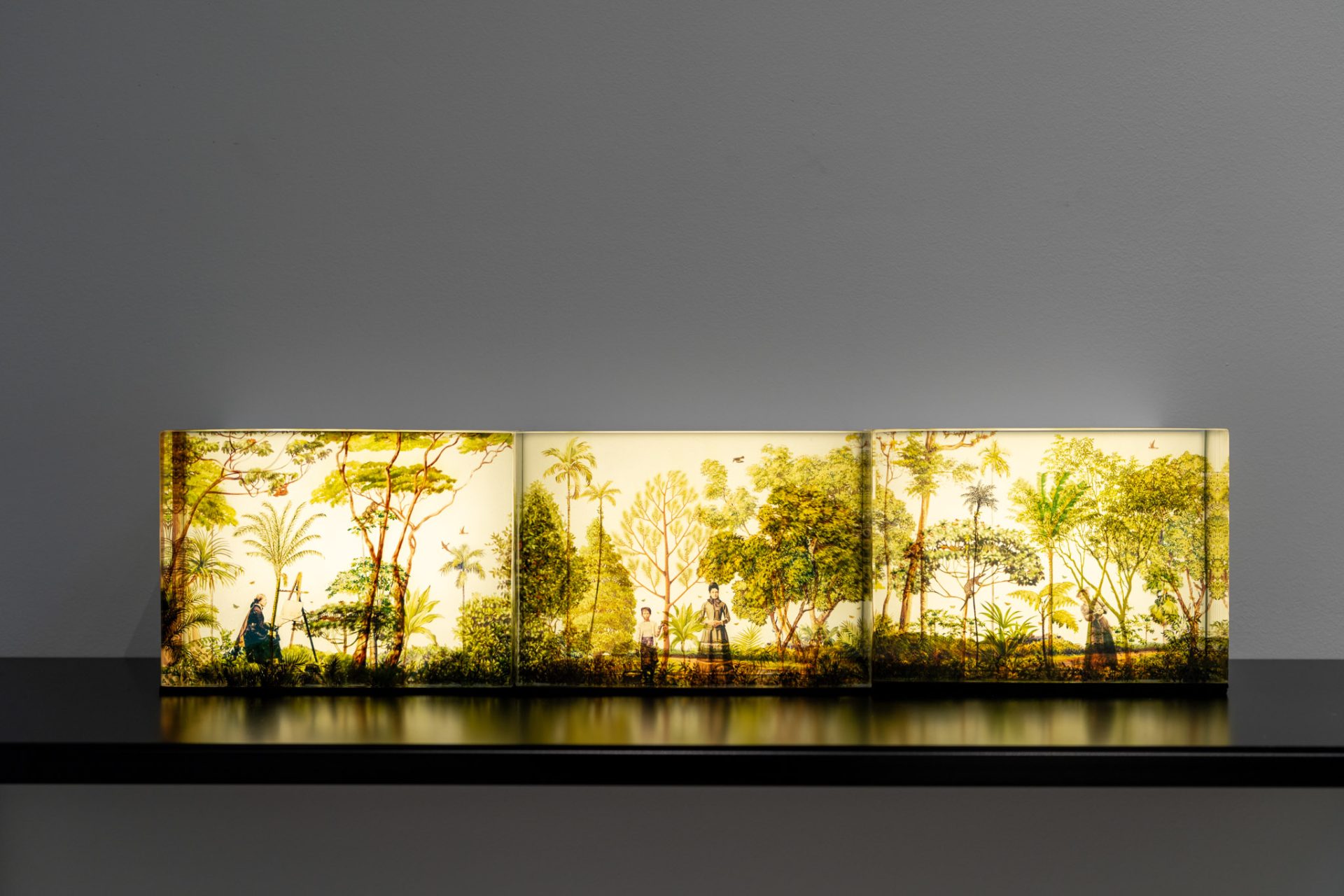
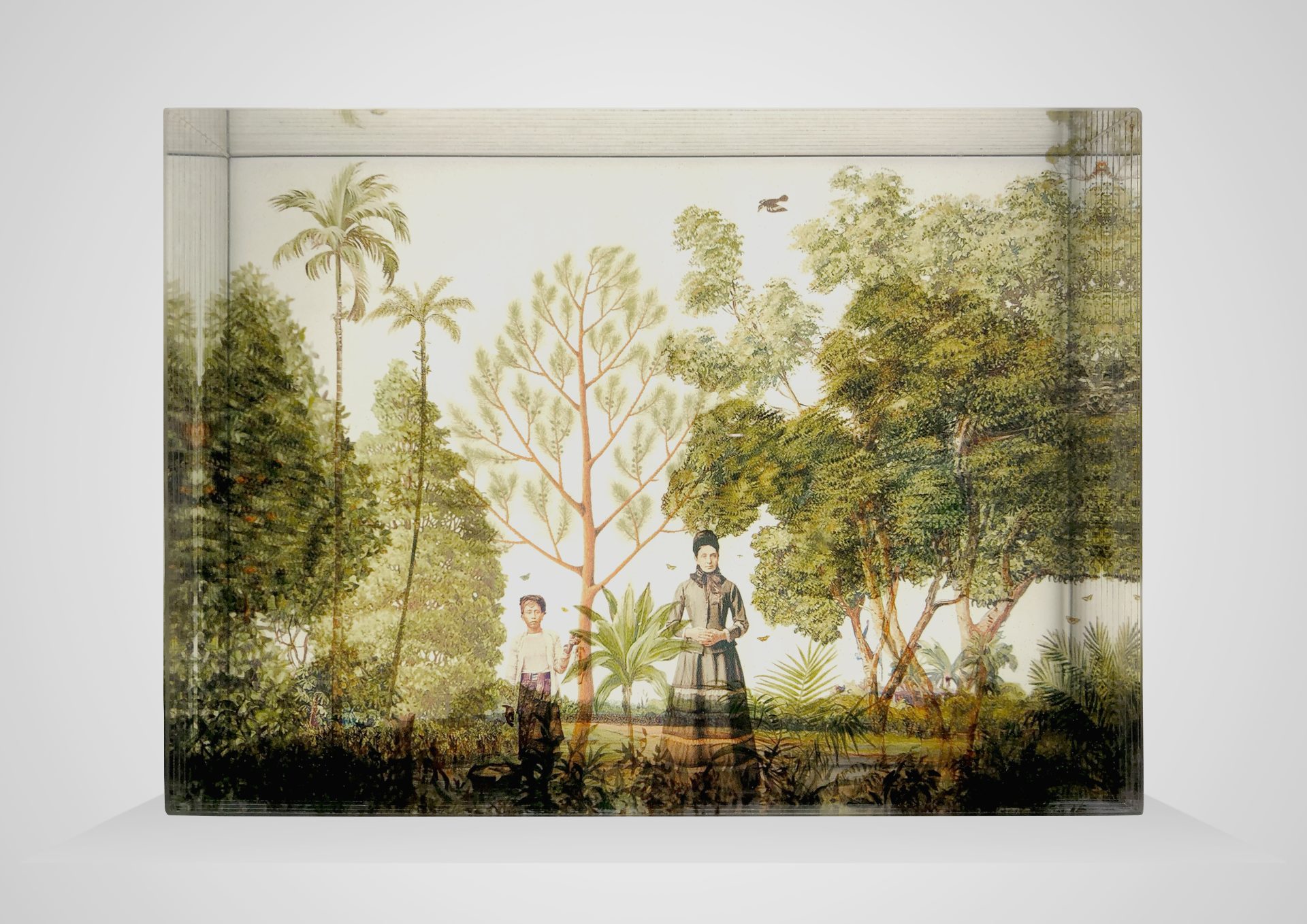
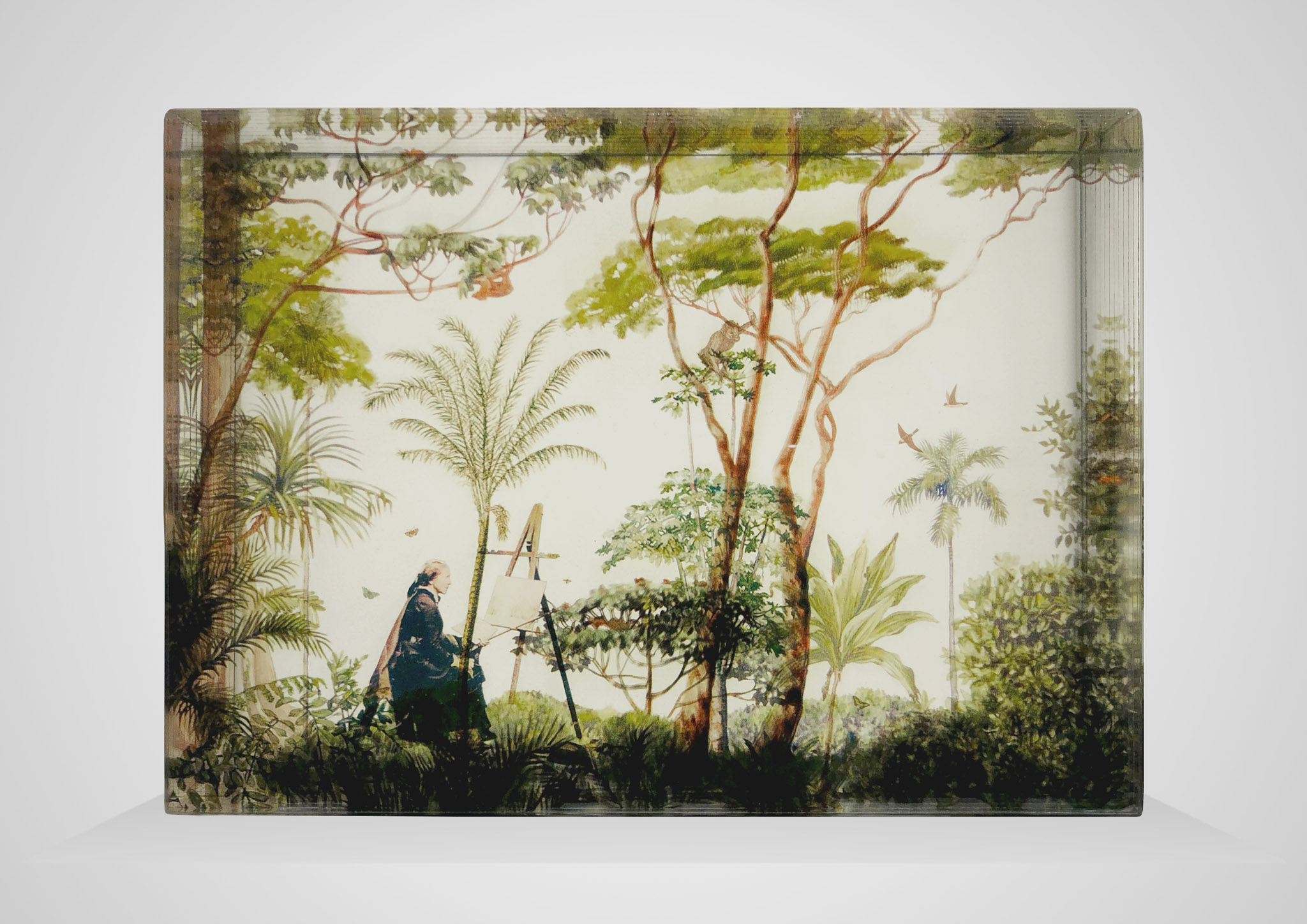
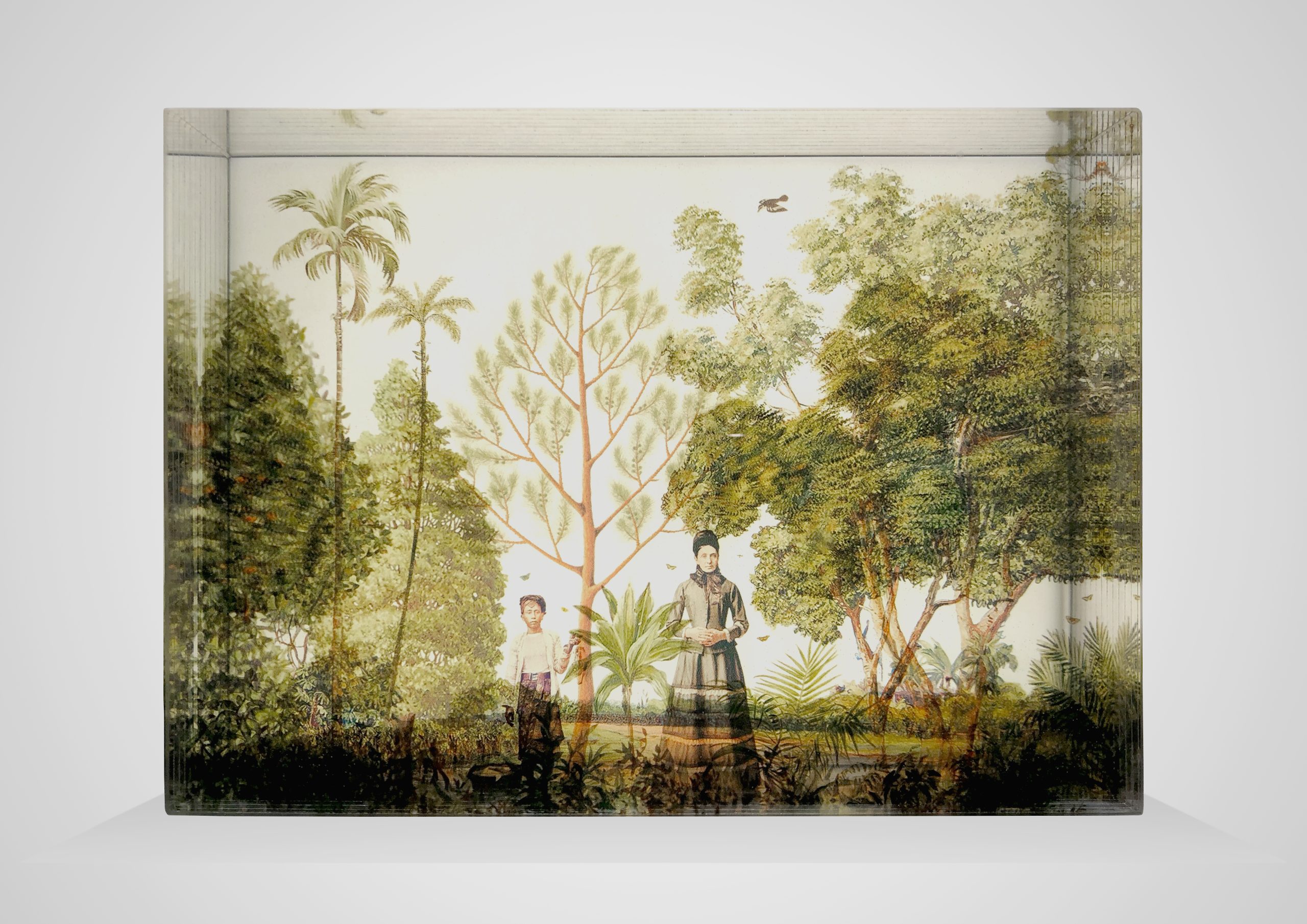
Donna Ong’s intricately detailed dioramas invite viewers to step into a layered and multifaceted exploration of the tropical forest. These three-dimensional tableaus are composed from imagery drawn from English biologist Marianne North’s (1830 – 1890) depictions of tropical landscapes, interspersed with representations of early, lesser-known female explorers such as North herself and naturalist Isabella Bird (1831 – 1904). Interwoven with these historical figures are images of rarely-seen depictions of Southeast Asian animals such as the civet cat, and local people, emphasizing the intertwining of natural and human worlds within the tropical forest.
The title of the work makes reference to how representations of the tropics have historically been filtered through the genre of landscape painting, boasting dramatic or idealised views, and sensational flora and fauna. These vistas were often composed not from first-hand observation or experience, but cobbled together from botanical illustrations, travellers’ accounts, and pure conjecture. In contrast, North was known to paint directly in-situ, often dedicating hours or even days to meticulously capturing the landscapes before her. Ong’s works are a celebration of the courage and immersive dedication of intrepid female explorers, and the honesty with which they sought to communicate their observation and experience of the forest and of nature, in turn inviting viewers to consider how the natural world is seen, remembered, and represented.
Multi-disciplinary artist Donna Ong (b. 1978) is best known for her evocative and intricate installations, often composed from found objects which she transforms into immersive environments. Ong has a long-standing fascination with representations of landscape and the multiple narratives held therein; much of her recent work has centered on parsing depictions of the tropics, and how these frame our understanding of the relationships between humankind and nature, centre and periphery. In 2009, Ong received the Young Artist Award from the National Arts Council, Singapore, and her works have been exhibited extensively at home as well as abroad, including presentations at several institutional exhibitions as well as the Asia-Pacific Triennial (2018), the Thailand Biennale (2018), the Jakarta Biennale (2009), the Kuandu Biennale (2008), and the inaugural Singapore Biennale (2006).
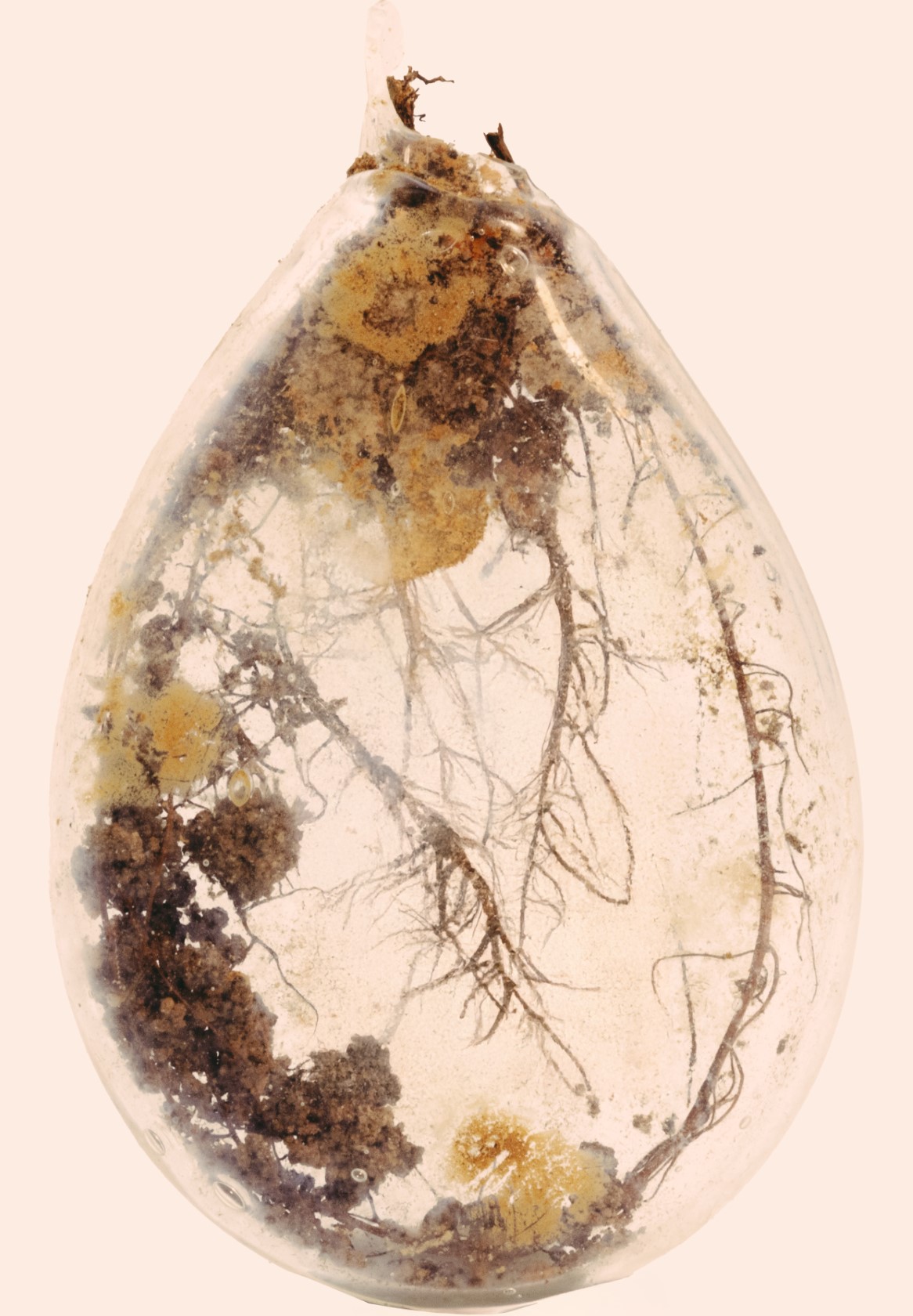
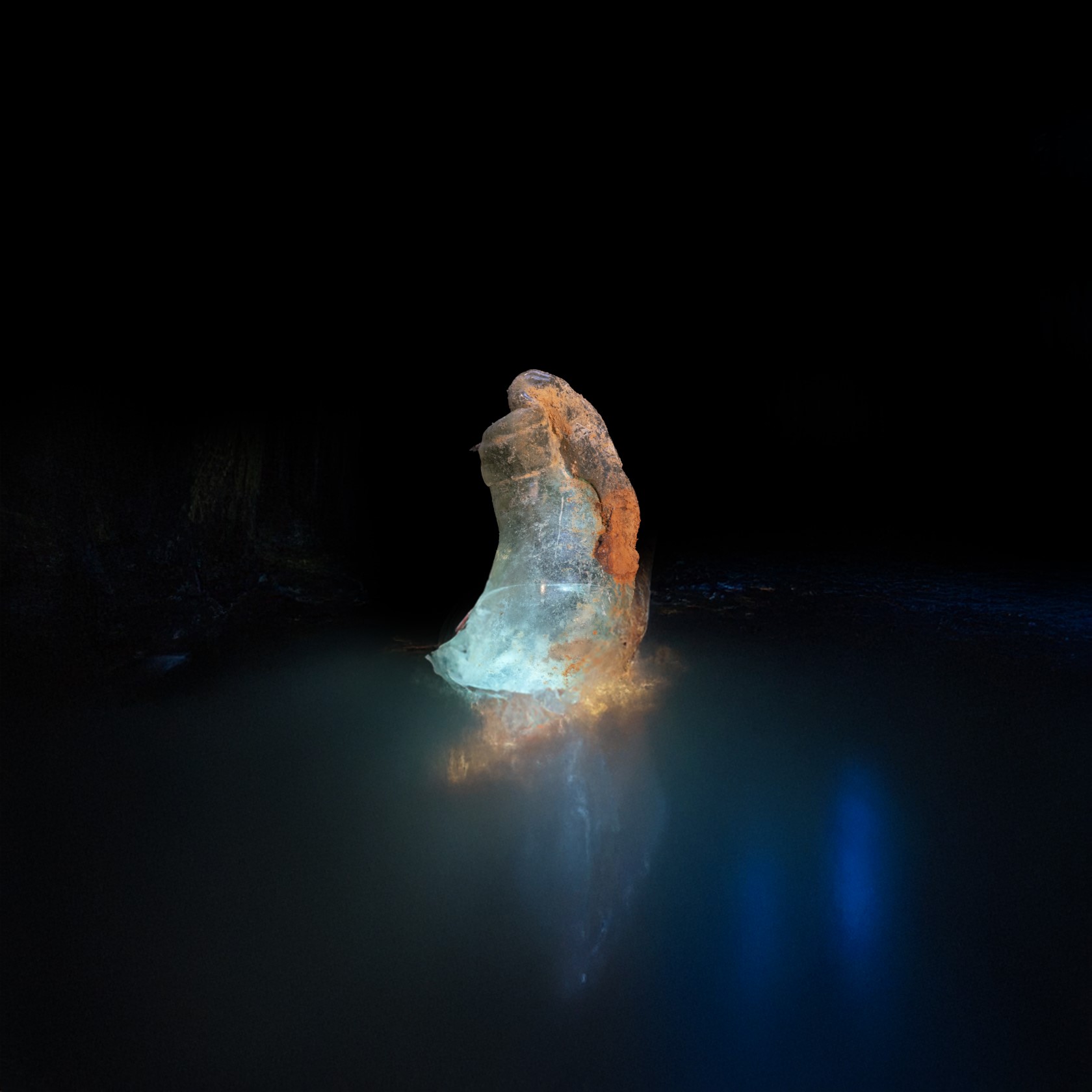
“The symbols of the divine show up in our world initially at the trash stratum”. (Philip K Dick)
In Shard 44 and Shard 37, artist Robert Zhao captures the profound transformations that emerge from layers of waste and decay, and invites us to imagine anew the relationship between humanity and nature. These evocative images are in fact magnified photographs of tiny glass shards – the remnants of human activity – that the artist discovered scattered around the ground of the forest near the Gillman Barracks art enclave. Over time, rain and water have weathered these shards, and nature has made its home inside and around them, creating beautiful and otherworldly fragments that capture an ongoing metamorphosis, and the dynamic relationship between the human and more-than-human worlds.
Robert Zhao (b. 1983) works chiefly with photography, but often adopts a multi-disciplinary approach, presenting images alongside text and objects to explore man’s relationship with the natural world. Through the use of convincing narratives that adopt the language of science and zoology, Zhao interrogates the concept of truth and challenges the viewer’s assumptions and attitudes around science, nature, and history. Zhao represented Singapore in their national pavilion at the 60th Venice Biennale (2024) and his works have been exhibited extensively at home as well as abroad, with recent presentations in the Thailand Biennale (2025), the Gwangju Biennale (2023), the Singapore Biennale (2019), the Asia Pacific Triennial (2018) and the Sydney Biennale (2016), amongst others. He has also received numerous awards for his work, including the Deutsche Bank Award in Photography, the 12th Benesse Art Prize (2019), the National Art Council’s Young Artist Award (2010), and the inaugural Silvana S. Foundation Commission Award (2020).
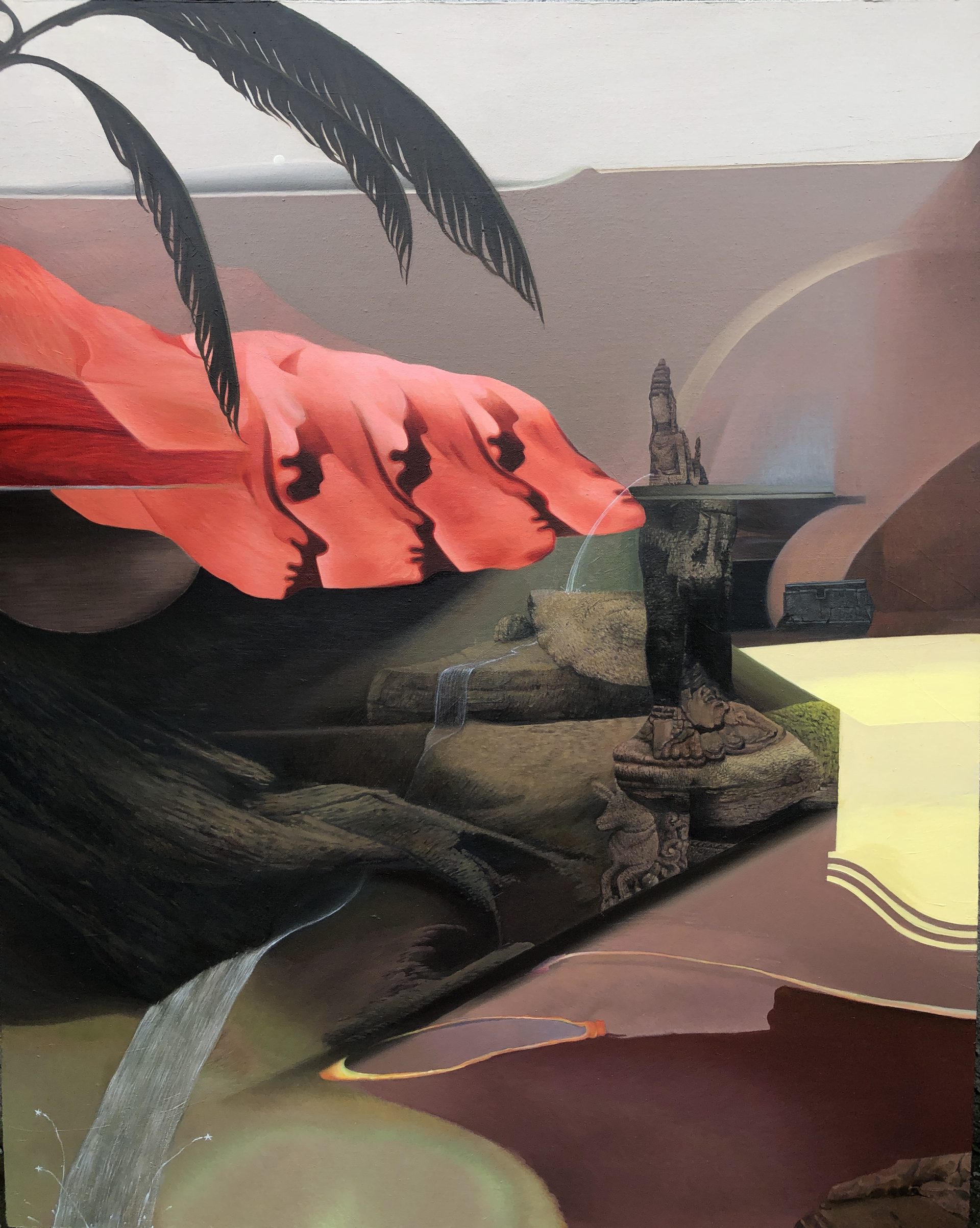
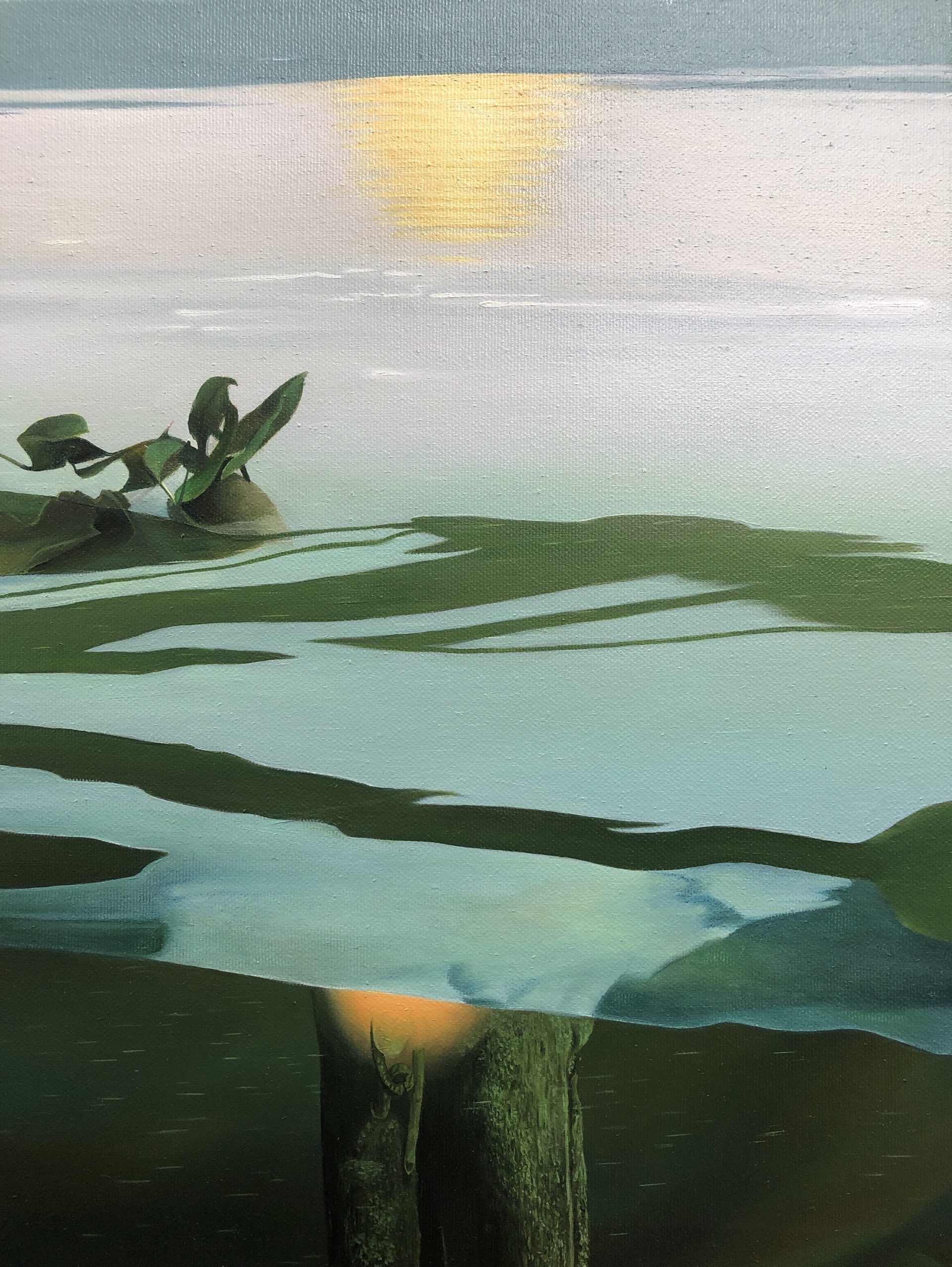
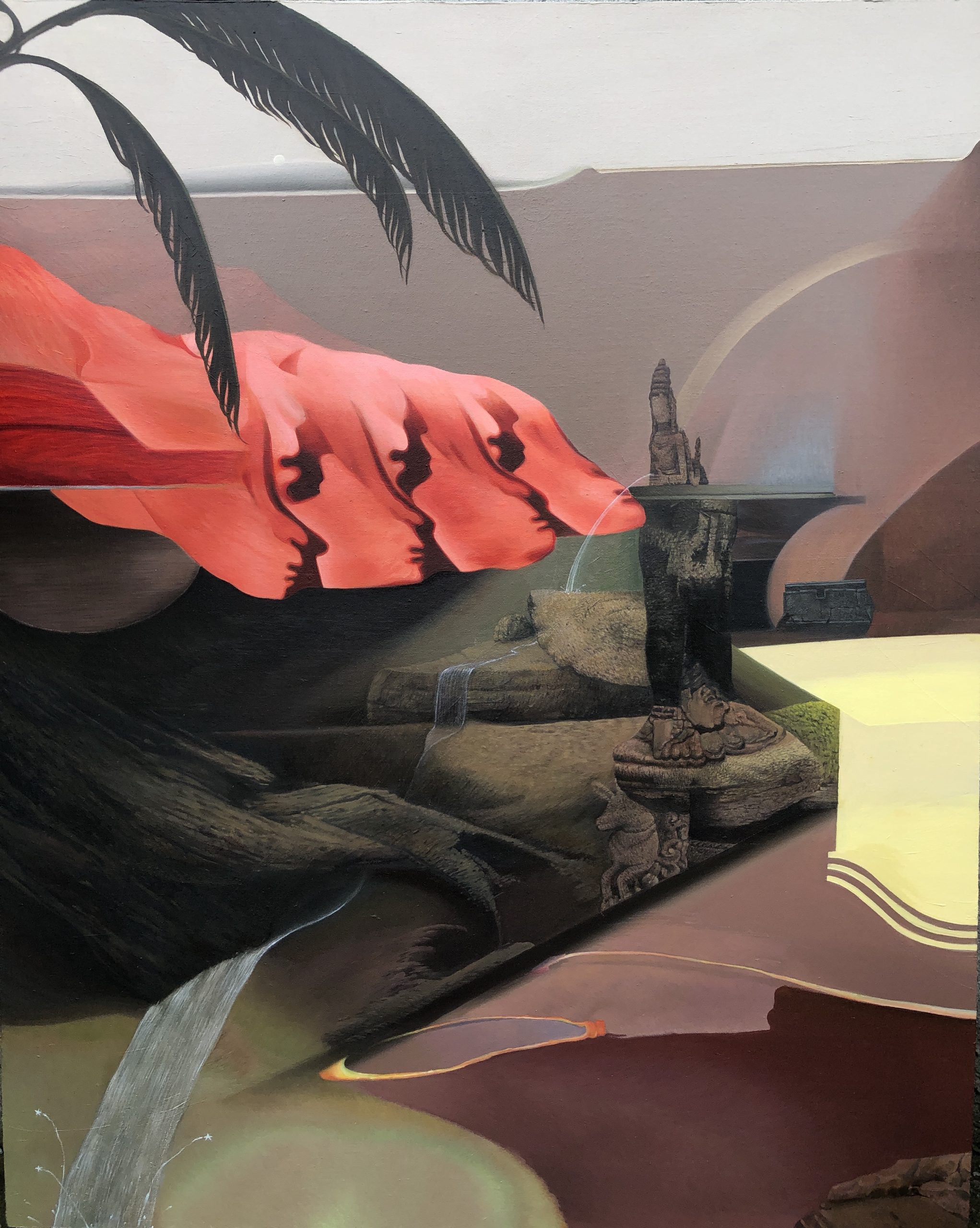
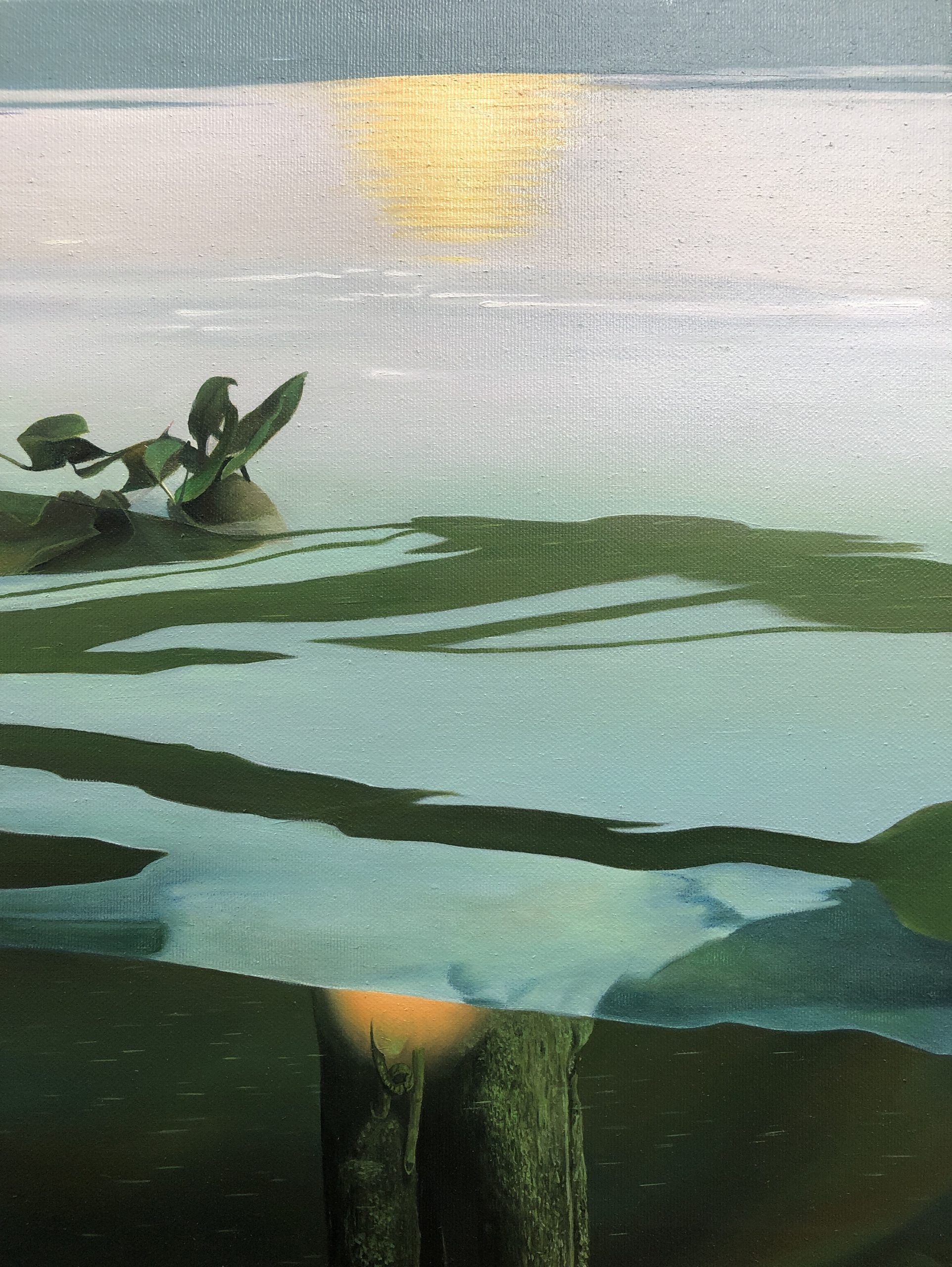
Enggar Rhomadioni’s evocative paintings, Altar Kelambu Basah (Soaked Veil Altar), extend his exploration of femininity — a quality revered in ancient Javanese culture and one he sensed as stillness and purity during his visit to an archaeological site in Nglurah Village, Central Java. At the site, Rhomadioni encountered statues of Durga — the Hindu goddess symbolizing strength and cosmic protection – as well as the yoni, a symbol of fertility. Notably however, there was no lingga present, the counterpart that traditionally signifies masculine power.
This absence shaped Rhomadioni’s perception of the site as a space where softness, stillness, and gentleness exist without the presence of overt power structures, a sensibility he translates into the two paintings. A charged stillness permeates Chapter I, with its landscape composed of several numinous objects – a statue, a tree, stones, and flowing water. In contrast to the warm sienna tones of Chapter I, Chapter II is characterized by a predominantly cool palette, and exudes the same serenity tinged with a sense of mystery. Beneath the placid surface of the water, another world is intimated in its infinite depths. The lyrical linework and asymmetrical composition of both paintings produce a sense of fluidity and malleability: like a shapeshifting vision, or mirage. Rhomadioni is not attempting to reconstruct the historical narrative of the site that inspired these works; rather, he attunes himself to its atmosphere: calm, gentle, and free from any form of domination. In this context, it becomes a reflection on the quality of the feminine in sustaining an ecological balance.
Enggar Rhomadioni (b. 1992) regards memory as something that is emotional, rather than just an intellectually-organised database or archive. Through materials and objects, one understands oneself, and as such, the elements in his surreal paintings reach into our psyche and prompt our basic ability to recognise ourselves through others, and to connect with the painter’s experience. Much of his recent work has explored traditional Javanese beliefs, in order to understand and recontextualise them from a contemporary perspective. Rhomadioni has participated in several group as well as solo exhibitions in Indonesia as well as Singapore, including Convergence at Gajah Gallery, Singapore (2019); Kontraksi: Pasxa Traditionalisme at National Gallery of Indonesia (2019), Kanda Laya at Kiniko Art Room, Indonesia (2023) and KALABENDA at Ace House Collective, Indonesia (2021).
What Remained of Everything belongs to a body of work by Francois Weiss that explores the interplay between the elements of nature and the human experience, evoking a sense of awe and reverence for the mysteries of the universe. Through the use of symbolic imagery, enigmatic inscriptions, and materials that have long been used to create enduring totems, such as stone, marble, wood, and bronze, Weiss’s works reach far back in time and invoke ancient tales and texts that have shaped the cultural landscape of the human race for centuries. Each artwork is imbued with a palpable sense of primordial wisdom and knowledge, like a riddle to be decoded and deciphered. They speak to us on a subconscious level, tapping into the deep-seated fears and hopes that lie within us all — in the words of the artist, “sometimes I feel they’re saying something I’ve always known”.
Francois Weiss (b. 1963) is a self-taught artist with a background in photography and set design for the House of Lanvin in Paris. Prior to his move to Bangkok, he ran a studio-gallery in Paris where he exhibited the work of artists whom he admired. His own artistic practice is informed by his passion for postwar art, the ancient world, and long-vanished civilisations. Working with a variety of mediums and materials, including photography, clay, wood, and stone, Weiss creates works that fuse a wholly modern sensibility with an enigmatic timelessness.
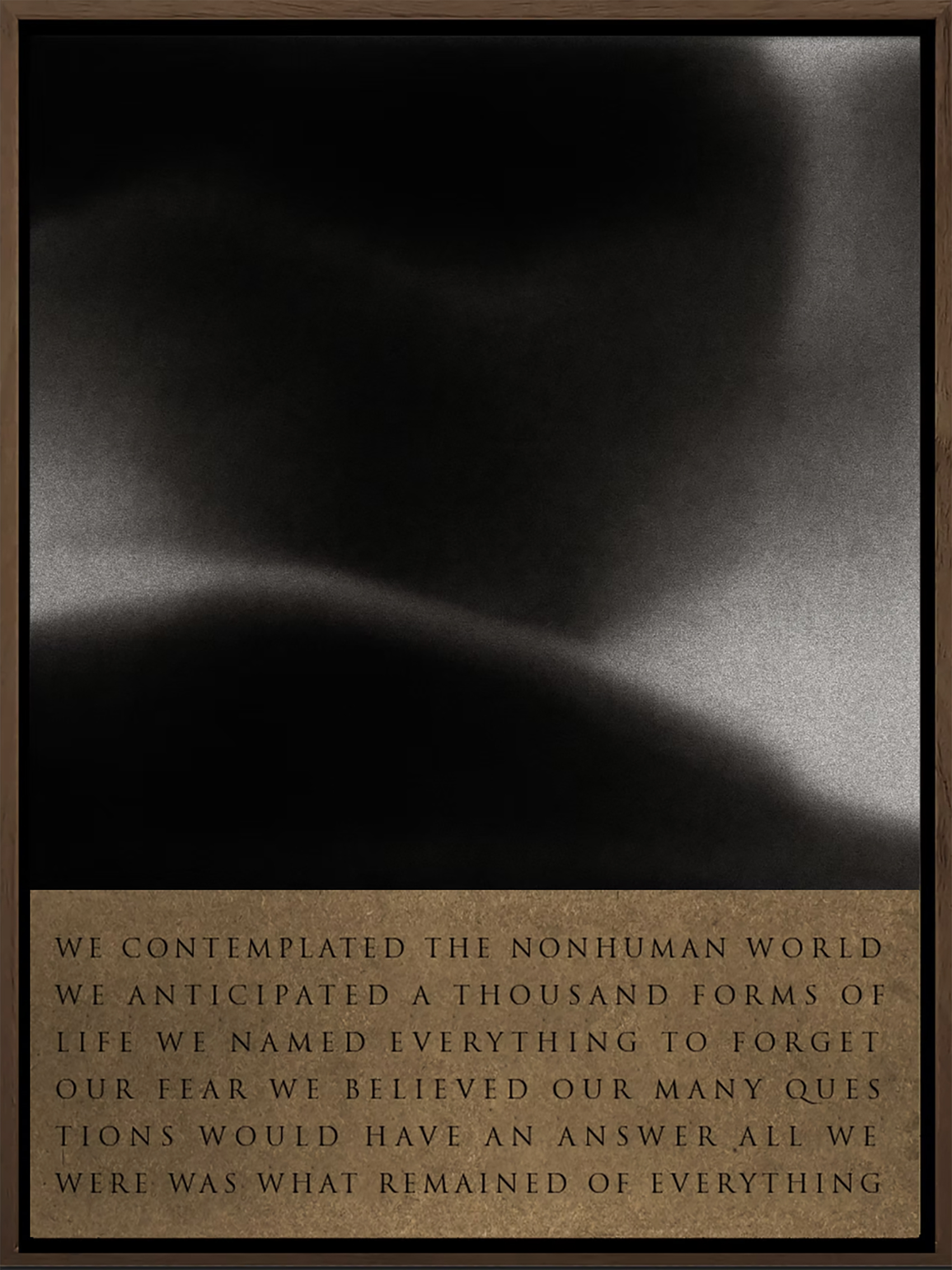
Francois Weiss
What Remained of Everything
2024
Dry Pastel on Canvas, Oak, Particle Board
78 x 58 x 6 cm
For a full dossier of available works, please contact siuli@appetitesg.com
Curated by: Tan Siuli